
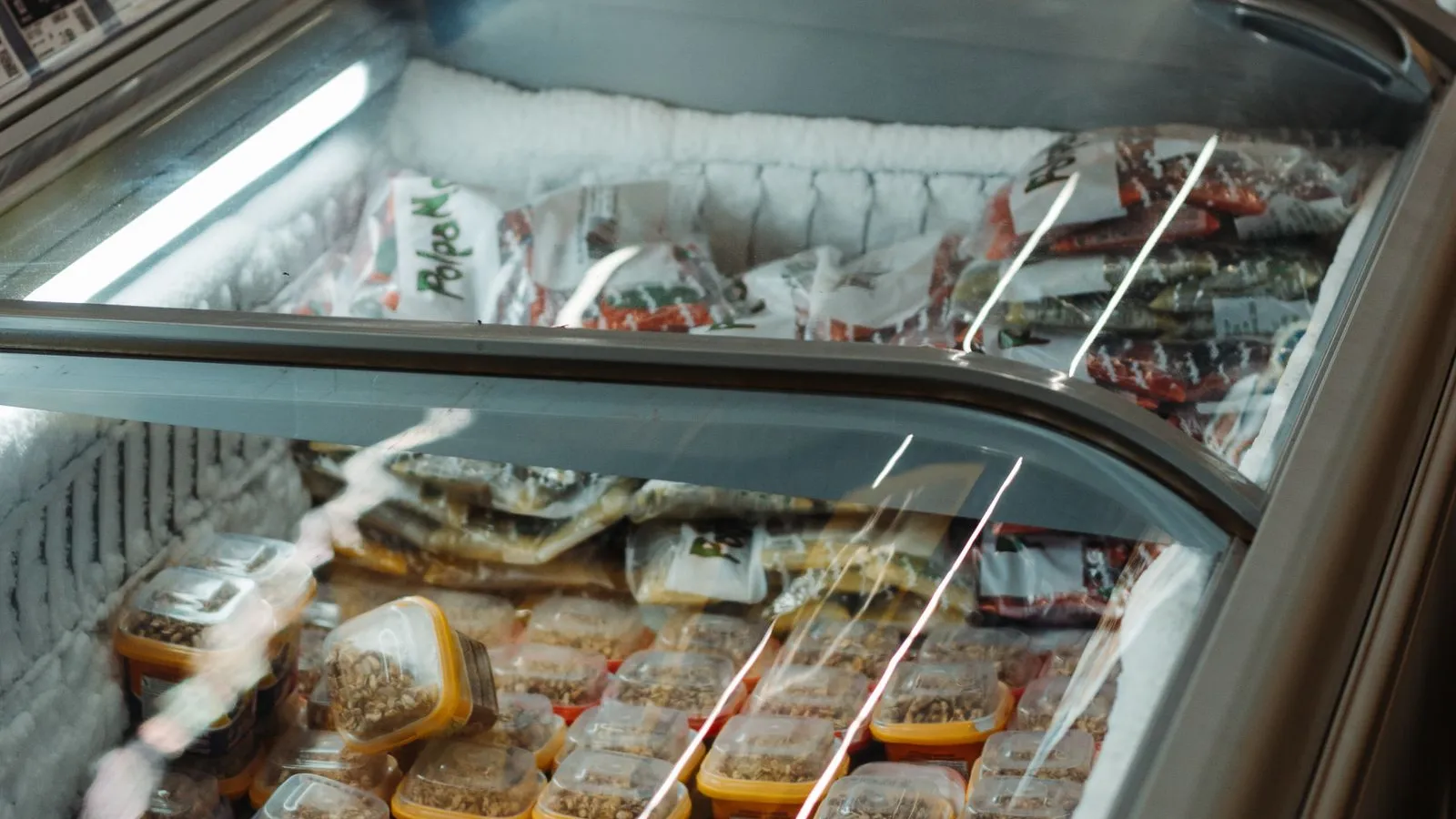
For a month, Europe's security establishment had a suspect in mind for the great supermarket freezer sabotage, and it had a Russian accent. On Monday, Paris named someone else.
"I can confirm that this attack was carried out by the Islamic Revolutionary Guard Corps of the Islamic Republic of Iran," French foreign minister Jean-Noël Barrot told reporters after a G7 meeting in Paris. He was talking about the night of 11 to 12 October, when fridges and freezers at some 700 food sites across France were remotely heated, in some stores reportedly to 50C. His ministry speaks of fires and losses worth "tens of millions of euros". Barrot called it "unprecedented in both its scale and its level of aggression". According to Tagesschau, he also called it the first large-scale cyberattack aimed at sabotage on French soil.
Then he announced the punishment. "We will implement sanctions at the European level against all those responsible."
That sounds tough. There is a small problem. The Revolutionary Guards are already on the European Union's terrorist list.
Blacklisted in February, back in October
On 19 February this year the Council formally added the IRGC to the EU terror list, after foreign ministers agreed it in January in response to Tehran's bloody crackdown on protesters. Its funds in Europe can be frozen. Nobody in the EU may make money available to it. France, the BBC reported at the time, had long hesitated and only came round at the last minute.
Eight months later, according to Paris, the same organisation reached into the back rooms of Carrefour, Intermarché and Monoprix and turned the freezers into saunas.
So the deterrent was tried. The most serious label Europe owns, the one Kallas said put the Guards on a par with al-Qaeda, was already in place. It did not stop anyone. The next step being offered is more names on more lists, to be discussed at a Foreign Affairs Council on 16 November. EU foreign policy chief Kaja Kallas promised that "if they are attributed, our response should be stronger". Note the "if". For the French wave, a member state had just done exactly that, on camera, that same afternoon.
Paris prosecutor Laure Beccuau has opened an investigation into the head of an IRGC-linked offensive cyber unit she named as Shahid Kaveh, and two of his deputies, the BBC reports. Good. But be honest about what that buys. These are men unlikely to be holidaying on the Côte d'Azur or keeping their savings in Luxembourg. An asset freeze on people with no assets here is a press release with a legal reference number.
Everyone was watching the wrong door
The second lesson is less comfortable for Europe's commentators, this paper included. When freezers failed in Belgium, Ireland, Sweden and four other countries a week ago, the instinct everywhere was to look east. The Kremlin denied it. A pair of Russian-aligned hacktivists claimed it, and almost nobody believed them. When we covered that second wave, we wrote that nobody had said who did it and that we would not guess. We are glad we did not.
Europe has spent four years learning to read Russian sabotage: drones over airports, cut cables, parcels that catch fire. That vigilance is right. But a continent that assumes every attack comes from one capital is a continent that can be surprised by another. Iran does not need Moscow's permission to find a fridge controller on the open internet. Neither does anyone else.
And it matters which door they came through. The French attack ran through software from the Danish firm Danfoss that lets shops manage their cooling remotely. As we argued on 2 November, the EU's flagship cyber law, NIS2, protects food wholesale and processing but leaves ordinary shops out, and the law that will make such devices secure by design only bites from December 2027. Tehran, if Paris is right, simply walked through the part of the building Brussels never drew on the plan.
Credit where due, then the hard part
Paris deserves real credit. Attribution is hard, it costs diplomatic capital, and most governments prefer to mumble. France named a state, is summoning its ambassador and has sent prosecutors after the unit's commander and his deputies. That is more than Europe managed after the flight bomb hoaxes this month.
But naming is the start, not the policy. Three things would make it count.
First, show the work. The BBC notes that France has not said how it reached its conclusion, and Barrot spoke only about France. Belgium, Ireland, Luxembourg and the others hit in the second wave, including the French blood banks, still do not officially know whether it was the same hand. Publish what can safely be published so their investigators and their retailers can check.
Second, make the price real and quick. If Iranian operatives or front companies can be identified in Europe, expel and shut them down now, nationally, rather than waiting for 27 capitals to agree a list that the target will frame and hang on the wall.
Third, close the door. Every exposed cooling controller in a European shop should be off the open internet by order of national cyber agencies this month, not by courtesy of a regulation in 2027.
Barrot promised "all other proportionate and necessary measures" to deter copycats. The proportionate response to an attack on the food in people's shopping baskets is not another line in the Official Journal. It is making sure the next one fails.