
On Wednesday afternoon, Kaja Kallas and Marta Kos stood in front of a slide in Brussels and handed out report cards. Ten countries, graded on courts, corruption, media freedom and how faithfully they vote with the EU on foreign policy. Montenegro got a gold star. Moldova was, in Kos's words, "the best performer in my class". Serbia was told to try harder. Georgia and Türkiye were sent to stand in the corridor.
It was a confident performance. It was also a strangely one-sided exam. Every candidate was marked. The examiner was not.
The good news is real
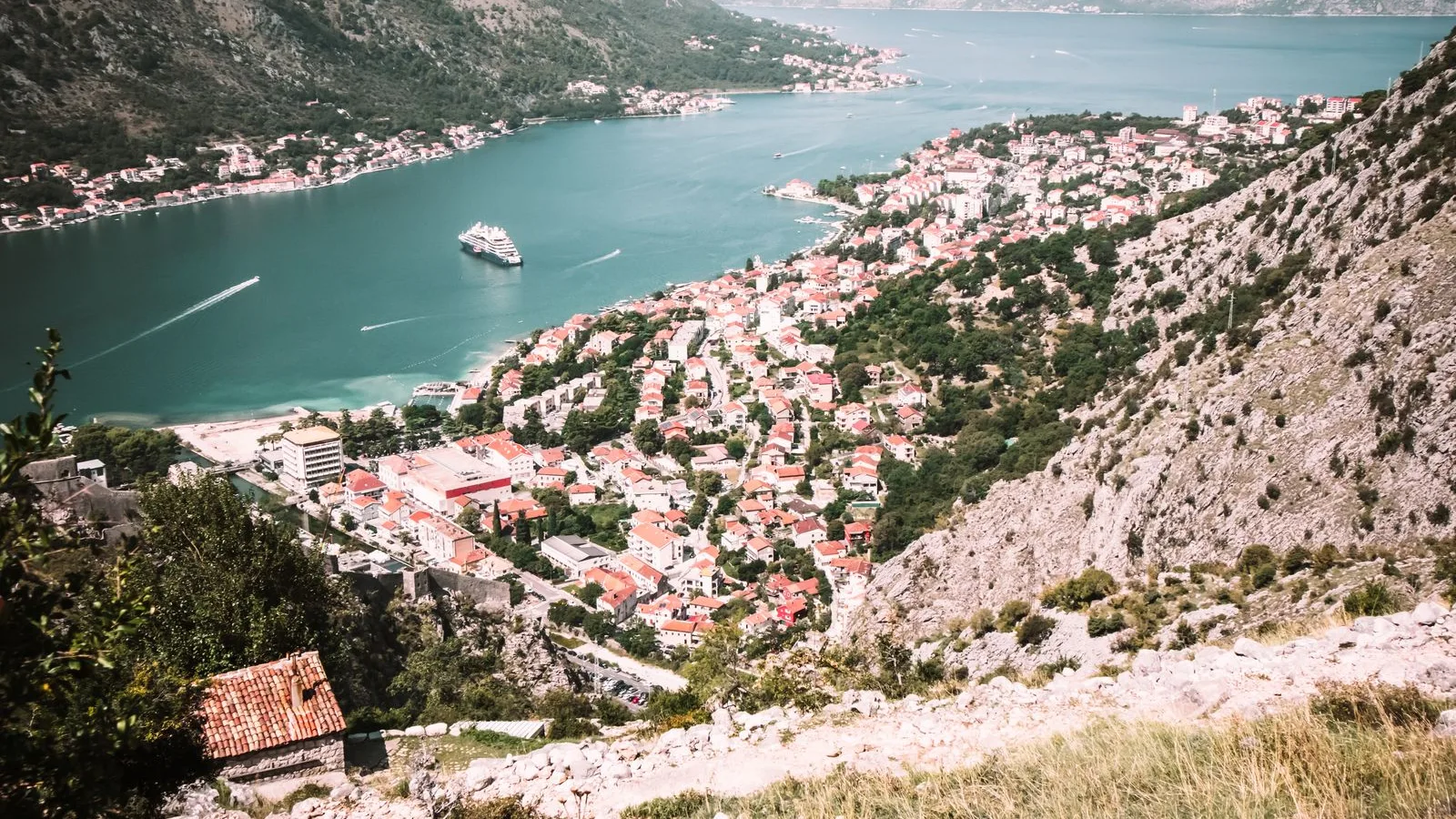
Credit where it is due. For the first time since Croatia in 2011, the Commission says it is in a position to close membership talks with another country. Montenegro has closed 21 negotiating chapters and, in the Commission's view, has met the conditions to close the other 14. Kos talked of signing an accession treaty "at the earliest in June 2027" and of Montenegro becoming the 28th member state in 2028.
That would be the first new member since Croatia joined on 1 July 2013. Montenegro has about 620,000 people, roughly the population of Düsseldorf, as Tagesschau pointed out. Letting in a small, NATO-member Adriatic state that has done its homework is not a threat to anyone. Moldova, which has done its reforms with Russian drones in its airspace and, Kallas noted, with "opponents who are interfering in our accession process", deserves respect too.
So far, so sensible. The trouble starts when you ask what the Union itself has done to get ready.
Membership with an asterisk
Look at the two new inventions in this year's package.
The first is "gradual integration". Kos said the Commission wants "more Europe ahead of membership", with dialogues starting early next year. Translated: a waiting room with nicer chairs. Candidates get bits of the single market and the programmes, Brussels gets their alignment, and nobody has to answer the hard question of when, or whether, they get a vote at the table.
The second is less visible and more revealing. According to Tagesschau, the Commission has proposed transitional arrangements for Ukraine that could sharply restrict farm subsidies and market access for certain agricultural products. Ukraine is almost 1.7 times the size of Germany. Michael Gahler, the German centre-right MEP who follows the file, told EUobserver that farming will be "one of the most complex chapters" of the whole negotiation. Kyiv, for its part, rejected farm carve-outs at this week's Euronews summit, and Montenegro's EU minister Maida Gorčević said her country would not accept "second-class" membership.
They are right to be suspicious. Brussels is promising full membership while quietly drafting the small print that would make it something less. That is not enlargement. It is a two-tier Union by stealth, designed so that French and Polish farmers never have to be asked what they think.
The bill nobody has read out
Then there is the question of power. Tagesschau's explainer put the standard Brussels line bluntly: so that an enlarged EU stays able to act, the principle of unanimity is to be abolished.
Read that sentence twice. The national veto is the last thing that guarantees a small or medium-sized country that it cannot be outvoted on tax or foreign policy. It is how Belgians, Dutch, Danes and Slovaks are heard in a club dominated by Berlin and Paris. If the price of letting in Montenegro, Albania, Moldova and eventually a country of some 39 million people at war is that every existing member loses its veto, then citizens deserve to hear that price stated plainly, before the treaties are signed rather than after.
They did not hear it on Wednesday. Kallas called enlargement "the EU's most successful foreign policy" and "direct investment in Europe's security". Kos ended by saying the Union's "historic opportunity is to make European unification happen". Their remarks had a lot about courage and very little about cost: no figure for the farm budget, no figure for cohesion money, and nothing on how many votes an enlarged Council would hand to whom.
The voters are the final chapter
Here is the irony. The one chapter Brussels cannot close by itself is ratification. All 27 members must approve every accession, and in France, as EUobserver noted, that means a referendum or a three-fifths supermajority in parliament. With anti-enlargement feeling rising in France, as the same report noted, that is not a formality.
Yet the people pushing hardest are the ones least interested in persuading voters. Euronews opened its enlargement summit with the slogan "Let's enlarge Europe. Now." That is a fine line for a conference hall in Brussels. It is a poor argument for a farmer in the Beauce or a pensioner in Limburg who has been told for two decades that the money is tight.
A centre-right case for enlargement exists, and it is a good one. A Western Balkans left in limbo drifts towards Moscow and Beijing. A Moldova abandoned after doing everything asked of it would be a gift to the Kremlin. Strategic depth matters.
But that case only survives contact with voters if it is made honestly. Three things would help.
First, judge the Union's readiness as strictly as the candidates'. Publish what an enlarged EU means for the farm and cohesion budgets, member by member, before Montenegro's treaty is signed.
Second, keep the veto. If the EU cannot take in a country of 620,000 people without rewriting how 27 sovereign states decide things, the problem is not Montenegro.
Third, stop inventing half-memberships. Either a country meets the conditions and joins as an equal, or it does not yet. A Union that hands out grades for the rule of law should not be drafting second-class contracts in the back office.
Montenegro has done its homework. On Wednesday, Brussels marked everyone's paper but its own. Before 2028, someone should mark it.