
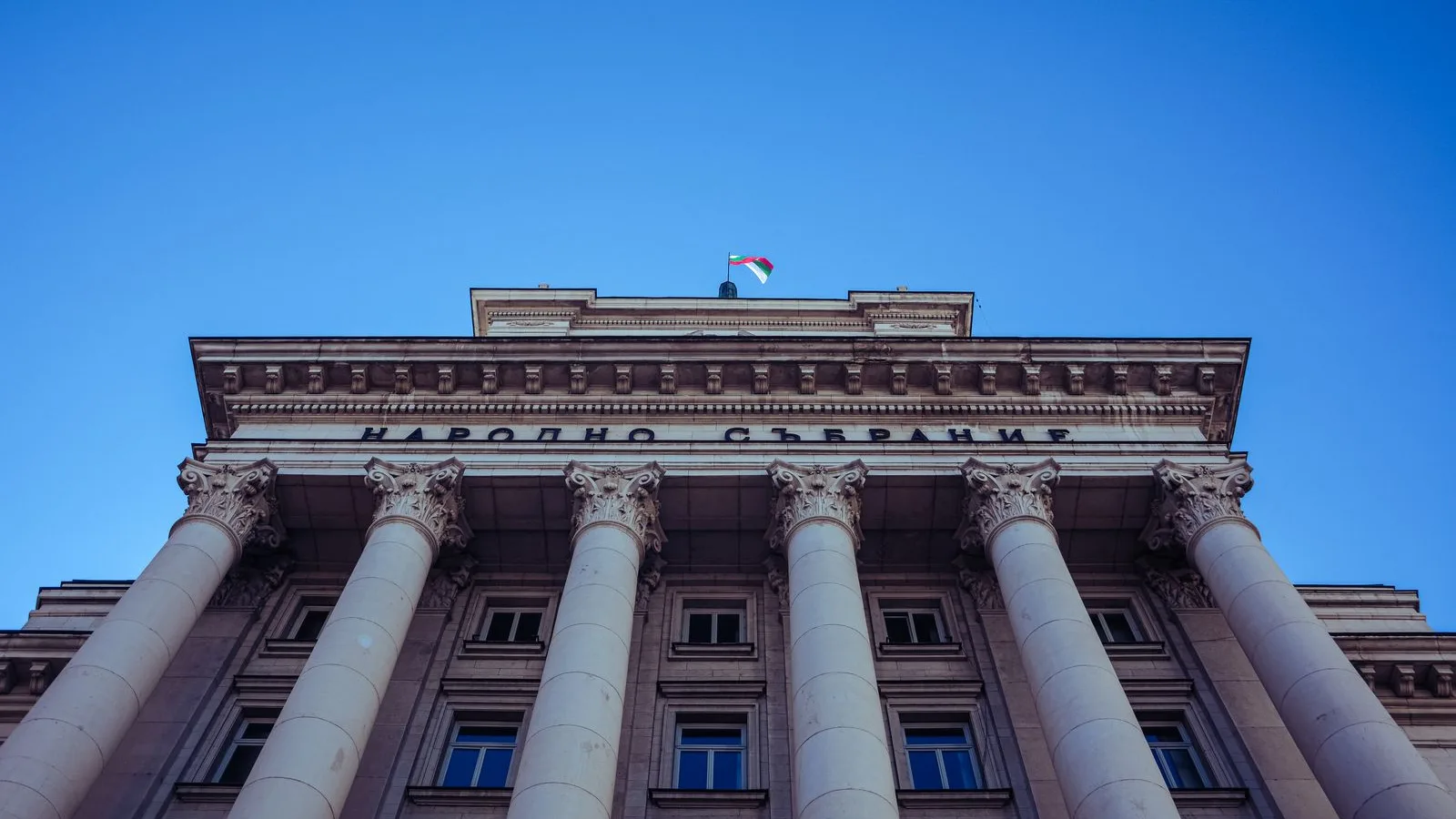
Iliana Iotova likes to call herself the "president of peace". On Sunday night, flanked by the prime minister who made her, she got to call herself something rarer in Bulgaria: the winner of a landslide.
With 99.68% of polling-station reports counted, the Central Election Commission has her on 57.7% against 39.4% for Andrey Gyurov, a banker and former caretaker prime minister backed by the pro-Western opposition. A week ago the gap between them was about 42,000 votes. Now it is more than 340,000. Gyurov has accepted the result. On paper, it is a rout.
Now look at the other number. Iotova won with 1,091,206 votes. There are 6,637,274 people on Bulgaria's electoral roll. That is roughly one voter in six. The first round drew about 22% of them, a record low; the runoff was projected at around 27%. The biggest party in Bulgaria on Sunday was, once again, the sofa.
One man, two palaces
The presidency is called ceremonial, and mostly it is. But it is the last office in Sofia that Rumen Radev did not already hold, directly or through a friend.
Radev was president himself until January, when he quit to found a party. Iotova, his vice-president for nine years, moved into his office. In April his new Progressive Bulgaria won an outright majority, the first single party to manage that since 1997, according to the BBC. In May parliament made him prime minister. On Sunday his former deputy won the presidency in her own right, from 22 January.
So the head of government and the head of state now come from the same small circle. The president can send a law back to parliament once; a majority of all MPs sends it straight back, and Radev has that majority anyway. The president is also commander-in-chief. Bulgaria has spent years with the opposite problem, eight general elections in five years, coalitions that lasted months. Stability was the cure everyone asked for. Concentration is what came in the box.
What Moscow didn't have to do
The easy headline in Brussels this morning will be "pro-Russian wins". It is not wrong. Iotova, in AFP's summary, favours dialogue with Moscow and opposes military aid to Ukraine. Radev has made the same case for years.
But it lets everyone else off the hook. Bulgarians were not dragged to the polls by Russian bots. They mostly stayed away, and the ones who came out were asked to choose between a candidate promising "incomes" and "peace" and one who said he had voted for a "secure, stable and European Bulgaria". One talked about the gas bill. The other talked about a direction of travel. Observers quoted by AP put the record-low first-round turnout down to a general mistrust of politicians. After eight elections, who could blame them?
That is the lesson for Europe's pro-Western camp, and it is not a new one. You cannot win the east by running as the local branch office of a continent. "European" is not a programme. It is an address. Voters want to know what you will do about prices, about pensions and about the drones off their coast, and too often the opposition answered by telling them which club they belong to.
The drones are still there
Here is where the "president of peace" gets her first exam, and it is not in Brussels.
In October several commercial ships were struck by drones in the Black Sea off Bulgaria, leaving 21 people missing, according to AFP. Radev said the attacks appeared to serve Russian interests and summoned the Russian ambassador. His government also says there is so far no evidence directly linking them to Moscow. In the last debate Gyurov hit Iotova for not blaming Russia. Her answer was that "peace can come only through negotiations".
Negotiations with whom, about ships that nobody will say who hit? You cannot negotiate with an attacker you refuse to name. That is not peace. It is a waiting room.
To be fair, Iotova also says she wants Bulgaria "strong in a strong Europe" and "sovereign in its decisions". She backs EU and NATO membership. Good. Then take her at her word on the last bit. A sovereign country finds out who is blowing holes in ships off its own coast and says so out loud, whoever it annoys. A president who wants to be taken seriously as a peacemaker can start by being serious about the war.
Don't send the lecturers
Brussels will be tempted to treat Sofia as the new Budapest: warning letters, worried op-eds, talk of conditionality. That would be the fastest way to turn one voter in six into a majority. Bulgarians have just shown they are tired of being told who the good Europeans are.
The better answer is duller and harder. Hold Radev and Iotova to their own promises on prices and corruption, to their own words on sovereignty, and to Bulgaria's obligations as a NATO state on the Black Sea. And let the opposition do the job it skipped this time: find out what the five in six who stayed home actually want.
The "president of peace" has her mandate. It is a thin one. How she uses it on the water will matter far more than how she won it at the ballot box.