
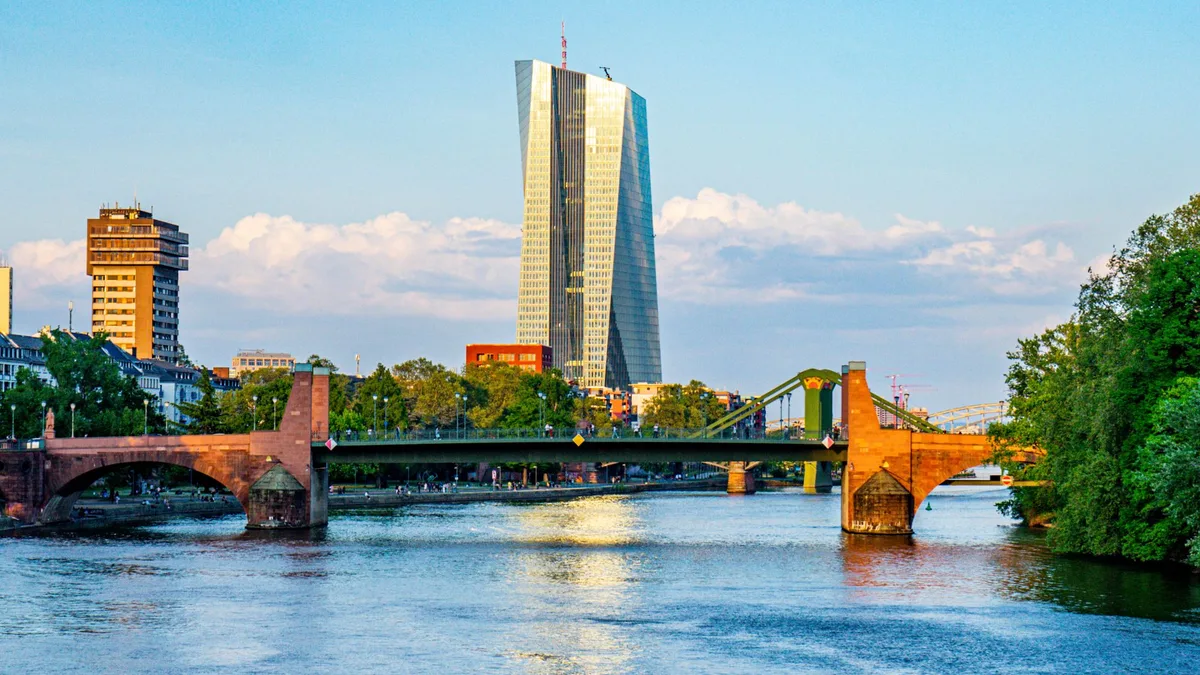
On Thursday, 29 October, the governors of the European Central Bank will sit down in Frankfurt and set a single interest rate for 21 countries. Most economists expect them to leave it alone this time. A Reuters poll earlier this month found that all but three of 73 economists expected a hold, and 64 of them expected another rise in December. The Financial Times, a week before the meeting, ran the headline: "ECB on course for another rate rise in 2026".
Before they decide, the governors might glance at one table. It is published by Eurostat, and it is the most eloquent argument against one-size-fits-all policy that Europe has produced in years.
One rate, many countries
In September, annual inflation in the euro area was 3.8%, according to Eurostat. That average hides a spread that would be comic if it were not costing people money. Lithuania: 6.1%. Spain: 5.0%. Bulgaria, which joined the euro on 1 January: 5.6%. Germany: 3.3%. Finland: 2.7%.
Every one of those countries now lives with the same ECB deposit rate of 2.50%, set after a 25-basis-point rise on 10 September. Euronews did the simple arithmetic: subtract each country's inflation from that rate and you get a rough real interest rate of minus 0.2% in Finland, minus 0.8% in Germany and minus 3.6% in Lithuania. For Vilnius, money is still very cheap. For Helsinki, where the Bank of Finland expects unemployment of 10.4% this year, another rise would be a further squeeze on an economy that is barely growing.
There is no rate that is right for both. There never was. The euro's founders knew this and hoped economies would converge. A quarter of a century later, the table says they have not.
You cannot raise rates against a strait
The second problem is more fundamental. Look at what is driving the numbers. Energy prices across the euro area were up 18.9% in September and contributed 1.71 percentage points of the 3.8% headline rate, Eurostat's figures show. Excluding energy, inflation was 2.3%, close to target.
The ECB said as much itself in September: "The conflict in the Middle East continues to generate inflation pressures." That is true. It is also a confession of limits. A central bank in Frankfurt can make mortgages more expensive in Kaunas and Málaga. It cannot reopen the Strait of Hormuz, fill a tanker or lower the price of diesel. Higher rates fight inflation by cooling demand, which means fewer jobs and less investment, while the supply shock carries on regardless.
That does not mean the ECB should do nothing. Its job is to stop a one-off energy spike from turning into a wage-price spiral, and there are signs of that risk in places. In Lithuania, services inflation was 6.9% in September, Euronews reports, with the Bank of Lithuania expecting average wages to rise 9.4% this year. But for much of the euro area, an energy shock plus modest core inflation is exactly the case where tightening hurts most and helps least.
Governments are making it worse
Here is the part that should embarrass national capitals more than Frankfurt. A good share of Europe's inflation differences are made at home.
From January, Lithuania raised VAT on residential heating, hot water and firewood from 9% to 21%, Euronews notes, and the government's own draft budget reckoned the heating change alone would add half a percentage point to inflation. Germany, at the other end, lowered electricity, gas and district-heating prices through federal measures and cut fuel tax from 1 October, which should show up in its October figures. Each government is pulling a different lever, and the ECB is left to set one rate for the sum of their choices.
This is the hidden cost of a single currency without a single fiscal policy, and it is one a centre-right reader should take seriously without falling for either of the easy answers. The euro is not going to be dismantled, and its members gain real things from it: no currency crises, cheap cross-border trade, lower borrowing costs for weaker states. But nor should it become the excuse for a fiscal union that hands Brussels yet more of national budgets. The honest conclusion is narrower and harder: if you share a currency, you have to behave. That means no tax hikes that feed straight into prices in the middle of an energy shock, and no subsidies that hide inflation instead of cutting it.
What savers are owed
There is one more group that rarely gets a mention in these debates: people with savings. A pensioner in Vilnius with money in the bank is losing more than 3% a year in real terms at today's rates. A family in Espoo with a variable mortgage is paying for an inflation problem that, outside fuel, Finland barely has: core inflation there was 1.4% in September, according to Euronews.
The ECB's mandate is price stability, and it is right to take inflation of nearly double its target seriously. But it should also be honest about what it can and cannot do. It cannot end a war in the Gulf. It cannot undo Lithuania's VAT rise. And it cannot set a rate that suits Helsinki and Vilnius at once.
Next Thursday, the governors will probably hold. In December, the markets think, they will tighten again. Either way, the lesson of the Eurostat table stands: one interest rate is a blunt tool, and Europe's governments keep making it blunter.