
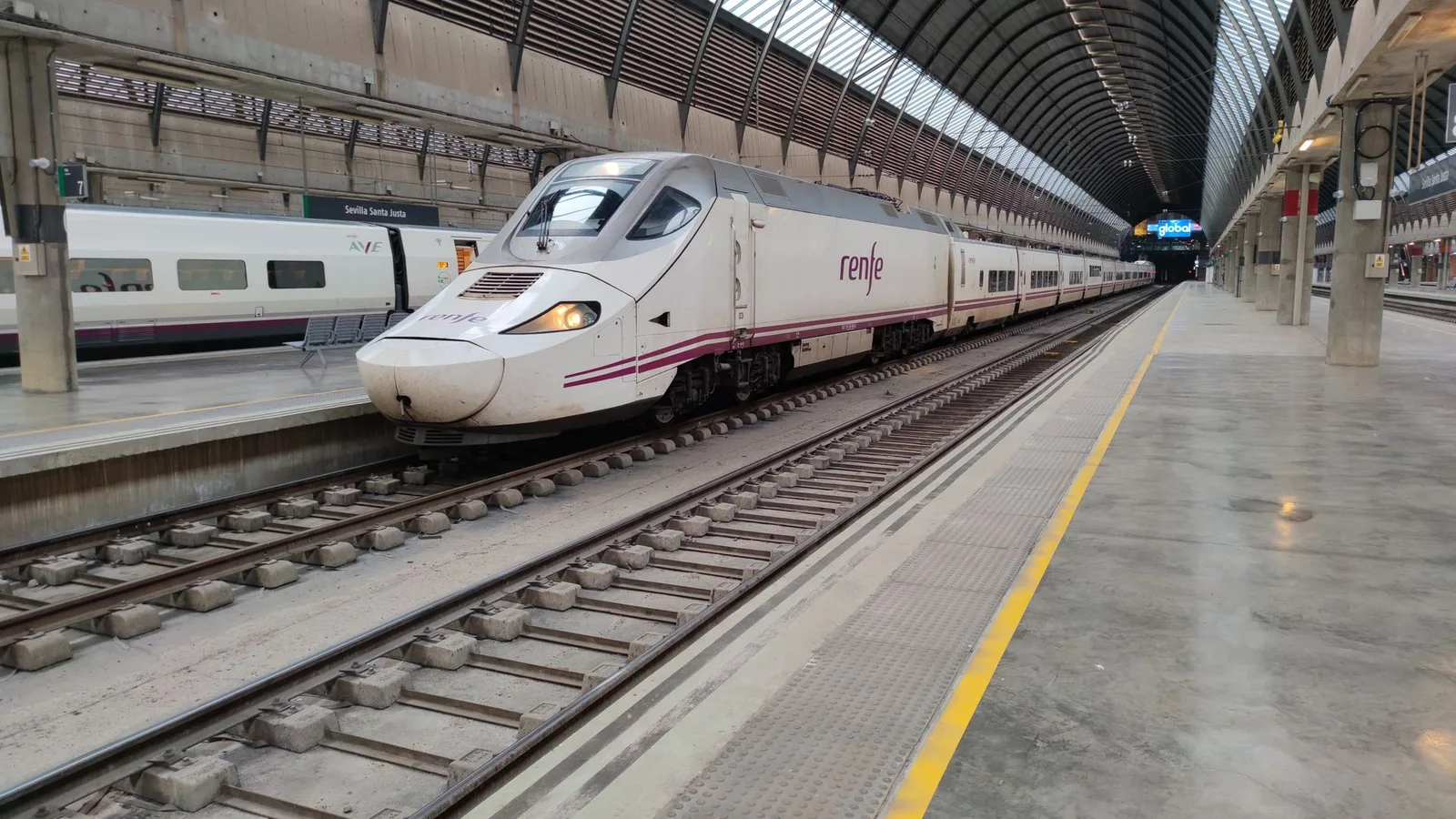
At about half past eight on Wednesday morning, a computer failure knocked out the LZB safety system along 63 kilometres of the Madrid–Seville high-speed line. The system did exactly what it is built to do when it loses its eyes: it stopped about six trains in their tracks.
At 8.36, according to Spain's transport minister, Óscar Puente, the control centre in Madrid authorised a Renfe AVE to resume normal running, with a red signal still showing. It travelled some 25 kilometres. At around 8.53, near the village of Urda in Toledo province, it ran into the back of a stationary Iryo train.
By Wednesday afternoon the regional government of Castilla-La Mancha had counted at least 68 dead, and rescuers had still not reached the bottom of the wrecked carriages. Spain is in three days of official mourning. Before anything else is said, that is the fact that matters.
But something else must be said, because this is the second time this year.
The explanation arrived quickly
Ministers are usually accused of saying too little after a disaster. Puente said a great deal, and fast. Speaking from the headquarters of Adif, the state rail infrastructure company, he told reporters that the train should have been running "a la vista", at a crawl, ready to stop for anything on the line. Instead, "it was the control centre, through its operators, that made the decision to resume traffic, under circumstances that, from our point of view, are inexplicable".
The drivers were not to blame, he said. The official who gave the order has been identified and is being questioned by the Guardia Civil and the rail accident investigators, Politico reports. "I am not attributing responsibility to anyone," Puente added. "I am just stating the facts."
Then he stated one more. That same morning, he said, a similar instruction went to at least one other train, and it was the driver who corrected the control centre: no normal running, only on sight.
Read that twice. On the day Europe's largest high-speed network lost its automatic protection, the last line of defence was a train driver willing to argue with headquarters. On one train, that worked. On the AVE, the order stood.
A control centre is not a lone operator
The investigation may well show that one person made one terrible decision. If so, that person will answer for it, and should. But the person at the console does not write the procedures, set the staffing, design the fallback when the signalling dies, or decide whether a single instruction can release a high-speed train onto 25 kilometres of track with another train standing on it. Puente said the section allows up to 200 km/h. Investigators are still establishing how fast the AVE was going.
Those decisions belong to the system. The system belongs to Adif. And Adif answers to the transport ministry, which is to say to Óscar Puente.
That is the uncomfortable thing about calling an order "inexplicable". It is meant to sound like candour. It also places the cause neatly below the minister's desk. A minister who did not know that his own control centre could issue an order like that has a problem. A minister who did know has a bigger one.
When Puente was asked whether he would resign, he declined to say. He was not thinking about himself, he said, but about resolving the situation.
We have been here before
On 18 January, on the same line, in a crash involving trains from the same two operators, 46 people died near Adamuz in Andalusia. The cause is still under investigation. The preliminary findings pointed to the track or a weld. At the time, Puente had said the line was "completely renovated" between 2021 and 2025 at a cost of €700 million. He later clarified, Rapporteur reported, that "complete renovation" did not necessarily mean every section had been replaced.
The opposition People's Party demanded that he answer for it. Pedro Sánchez stood by him. There were no political resignations.
There was, however, a prosecutor. In March, the European Public Prosecutor's Office confirmed it had opened an investigation into possible fraud affecting EU funds for maintenance of the track near Adamuz. Brussels had granted €111.6 million from its regional development fund in June 2024 to upgrade that line. In March the ministry said the paperwork for the money had been handled "with absolute normality". The probe is at an early stage and nobody has been charged. But it is worth noticing who started asking questions about the EU money: the prosecutor did, on its own initiative. On Wednesday, Ursula von der Leyen posted that "Europe mourns with you."
Sánchez says the two disasters appear to have "completely unrelated" causes, while adding that it is not up to him to say so. He may be right. A suspected track fault and a wrong order are different failures. But they happened on the same line, under the same ministry, nine months apart. In January the question was whether the government had looked after the track. Now it is whether anyone was looking after the system.
Ribbons and rails
Spain has every right to be proud of its high-speed network, the largest in Europe. Until this year its accident rate was among the lowest in the EU, according to Eurostat data cited by the Guardian. Rail travel grew by 40% between 2019 and 2024, as the network opened to private operators such as Iryo. None of that is in dispute.
What is in dispute is where the money goes. Spain has spent around €1.5 billion a year on high-speed rail, according to a Reuters analysis of EU data cited by the Guardian, with only about 16% going to maintenance, renewal and upgrades. The government replies that it has increased maintenance spending by 54% since 2018. Both things can be true. New lines come with openings and photographs. Fallback procedures and staff training for a control room at half past eight on a Wednesday do not.
The people who run the trains have been saying so. Spain's largest train drivers' union had called a 24-hour stoppage at Renfe for Thursday, demanding "real and definitive technical solutions" to safety problems. That strike was announced before Wednesday. It reads differently now.
What accountability looks like
Spain votes on 29 November, and the temptation on all sides will be to turn grief into campaign material. Vox's Santiago Abascal has already called the government a "criminal organization". That is not accountability. It is noise, and the families deserve better.
Accountability is simpler and older. When a system fails twice under the same minister, the minister answers for the system. Not the dispatcher, not the driver, not "inexplicable circumstances". Sánchez said on Wednesday that it is "unacceptable for a country like Spain to suffer two high-speed train accidents in the same year". He is right. The question is whether anything that happens next will make that sentence mean something.
Puente says he is not thinking about himself. Someone in Madrid has to.
Update, 30 October 2026, 18:35: Puente rejected calls to resign on Friday. "If I believed my presence was harmful, I would have stepped aside," he said, adding that Sánchez had not asked him to go, Rapporteur reports. He again blamed an "inexplicable" decision and a breach of protocol at the control centre, and revealed that the LZB train-control system had broken down 170 times this year. Hours earlier Sánchez had said that trust in high-speed rail "has been broken", the Guardian reports. Puente's answer: "it is a safe system". The toll stands at 69. A safety system that failed 170 times in ten months is not a dispatcher's problem. It is the ministry's.