
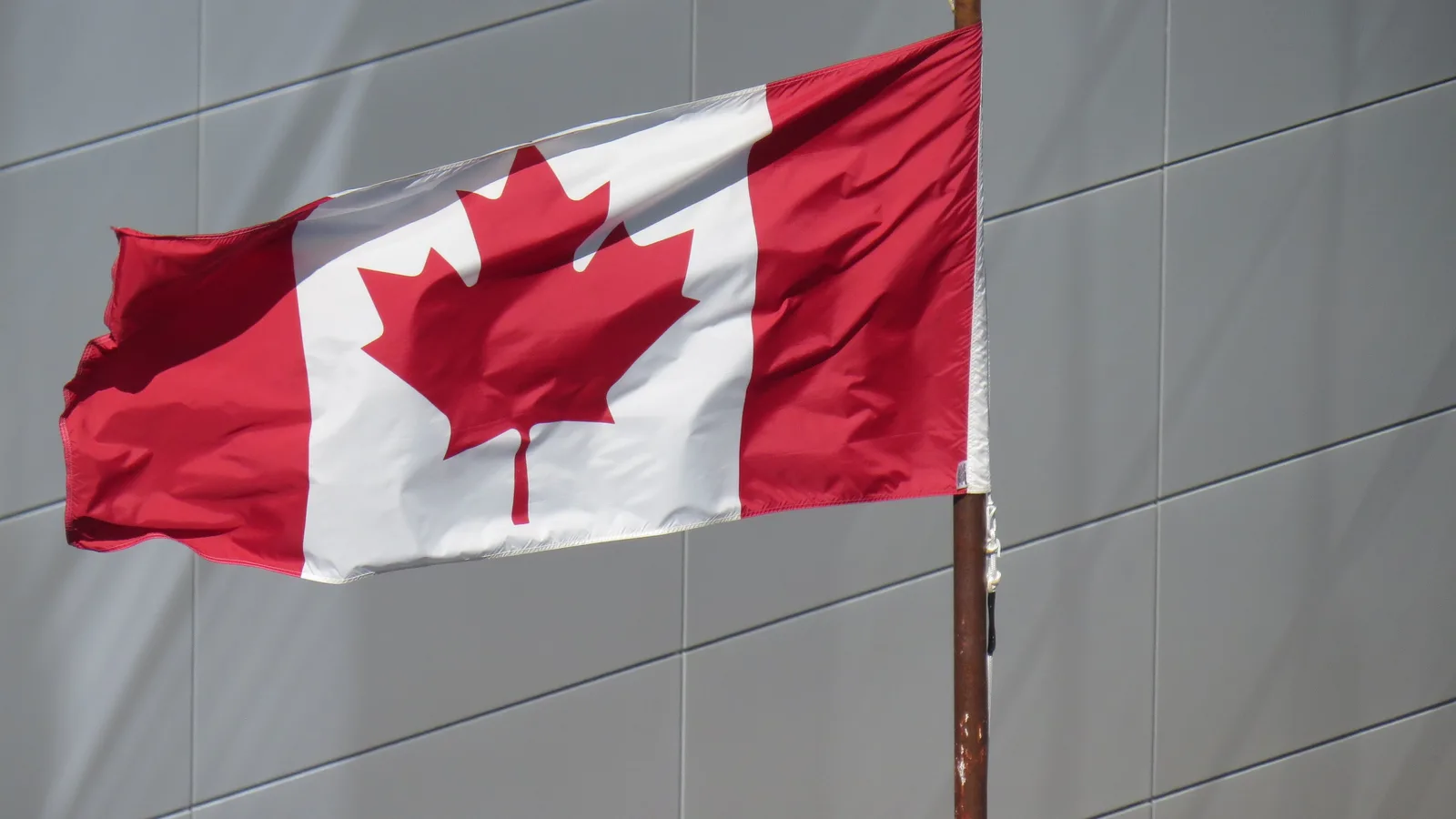
In 1906 a young Frenchman arrived in Canada to sell cognac. Ursula von der Leyen told the story on Thursday, standing in the Mount Royal Club in Montreal. The young man was Jean Monnet, later one of the fathers of the European Union, and what struck him about Canada, he wrote, was that "no one knew where the frontier was".
It was a charming opening. It was also, by accident, the most honest line in the speech. Because a few paragraphs later the President of the European Commission walked straight across a frontier that Europe's national governments had drawn for her the day before.
The word that was deleted
On Wednesday the member states finished rewriting the joint declaration for this week's EU–Canada summit. According to Euronews, which saw the drafts, Germany insisted that the phrase "associate membership" come out. Germany, France, Italy and Greece had all raised problems with an earlier version. António Costa's office spent hours negotiating. The new text, put through the EU's "silent procedure", offers Canada an "ever closer association", short of full membership.
So the governments of Europe, in writing, chose not to use the term. On Thursday, in Montreal, von der Leyen used it anyway.
"Canada cannot become a full-fledged member of the EU because of geography," she said, according to the Commission's own transcript, "but we both want to bring our relationship to the highest level possible. This is why we are discussing the idea of Canada becoming the first associate member of the European Union." She then explained what that would mean: "association without accession", closer alignment on policy, and cooperation "Parliament to Parliament" and "Court to Court". On X she went further: "We have a new ambition: bringing Canada closer to us than ever before, as associate member of the EU."
"We are discussing" is doing a lot of work there. The people she would have to discuss it with had just said no.
Four names, one evening
What followed was a small masterpiece of European communication. As soon as she finished speaking, Politico reports, Friedrich Merz put out a statement about an EU–Canada "Alliance for the Future", the phrase Mark Carney prefers. It did not mention associate membership. Merz is a German Christian Democrat. So is von der Leyen. Her own country led the campaign against her word.
Hours later Costa, whose job is to speak for the governments, tried to stitch it together. "Tomorrow, the European Union and Canada will launch an Alliance for the Future of Europe," he said. Von der Leyen had "put forward the bold idea" of associate membership, and "I share her ambition". But: "Whether that ends up being the term or not, one thing is clear."
Count them. Associate member. Alliance for the Future. Alliance for the Future of Europe. Ever closer association. Four labels for one relationship, from three European leaders and one draft, in a single day.
The Canadian Prime Minister, asked whether he was comfortable with "associate membership", gave the most diplomatic shrug of the year: "The President used both terms. The precise nomenclature is a question for Europe." Carney had already said on Tuesday that names do not matter. When the guest has to remind the hosts to agree among themselves, the hosts have a problem.
This was never about Canada
Nobody in this row has a bad word to say about Ottawa, and neither do we. Canada is a stable democracy with energy, critical minerals and a trade war with Washington. Closer ties make sense, and the substance on the table, from research and student exchanges to defence procurement and supply chains, is mostly sensible.
The row is about who speaks for Europe. Under the treaties, the Commission does not get to invent a new status for a foreign country. Article 49 opens membership to "any European State". Article 217 does allow association agreements, which are a real legal thing, but Article 218 requires the Council to approve them unanimously. In other words, the governments decide. As we reported a week before the summit, von der Leyen first floated the idea in September without asking them. Euronews says the same.
There is a fair objection here: Germany is not purely a defender of the treaties. Berlin had floated its own associate status for Ukraine, an idea Kyiv rejected. Germany's ambassador to Canada told CTV, as the BBC reports, that Berlin "has been using the term of associate membership for something completely different". Fine. Every capital has its own reasons. That is exactly why the capitals, not the Commission, have to agree on the words before they are spoken in front of a foreign audience.
Instead, the Commission's chief spokesperson, Paula Pinho, said on Thursday that "it would have been much better to have unity from member states on the initial wording". Note the grammar. The disunity, in this version, belongs to the member states, as if the problem were that 27 governments failed to fall in line behind a phrase nobody had asked them about. One EU diplomat put it less politely to Politico: "We are fighting each other about a few words which von der Leyen pulled out of thin air. This is not our proudest moment."
The bill for a slogan
There are real costs to this. Donald Trump has already called the idea "laughable" and threatened "very serious tariffs" if he decides it is a "hostile act", the BBC reports. Europe now risks a fight with Washington over a label its own governments have already deleted. In Canada, the Conservative leader Pierre Poilievre has been happy to point out that "no one's mortgage or grocery bill will come down" from a new name, since Canada already has a free-trade deal with the EU.
And there is a quieter cost at home. The phrase the governments chose instead, "ever closer association", echoes the first article of the EU treaty, which promises "an ever closer union among the peoples of Europe". That phrase has been at the heart of years of arguments about Brussels creeping beyond its brief. David Cameron spent early 2016 trying to get Britain exempted from it. Even when the member states rein the Commission in, it seems, the vocabulary of creep survives.
What a confident Europe would do
The fix is not complicated. Let the 27 decide what the partnership actually contains: the feasibility study on Canadian LNG, the critical-minerals cooperation, the place in Horizon and Erasmus, the defence access. Write it down. Then give it a name, agreed by the governments who have to answer to voters for it. Substance first, slogan second.
Von der Leyen opened with Monnet's Canada, the place where no one knew where the frontier was. In Brussels that is still the problem. On Wednesday Europe's governments tried to draw the line. On Thursday she gave a speech on the other side of it.