
On Sunday night, 18 October, Emmanuel Macron went on television and drew the cleanest line a president can draw. On one side, the "factieux" of the ultra-left and the delinquents who joined them, the people who burned the town hall in Limoges, torched the tourist office in Lyon, forced their way into Marseille's city hall and attacked the prefect's residence in Bordeaux. On the other side, the "several hundred thousand" French citizens who had marched peacefully the day before with what he called, in so many words, legitimate demands.
"Never must we confuse the latter with those who destroyed, smashed, looted," he said, according to the Élysée's own transcript (our translation). Then came the line that will end up in the history books, if anything from this presidency does: "Nothing justifies it, nothing explains it, nothing excuses it."
Five days later, the line has moved. And it has moved onto the wrong people.
The bans fall where the law-abiding stand
On Thursday, after a meeting with ministers and intelligence chiefs, Macron announced curfews and bans on protests by what he called "groups without legitimacy", and accused organised ultra-left groups of "sedition", France 24 reported, citing AFP. Fine words. Now look at what was actually banned.
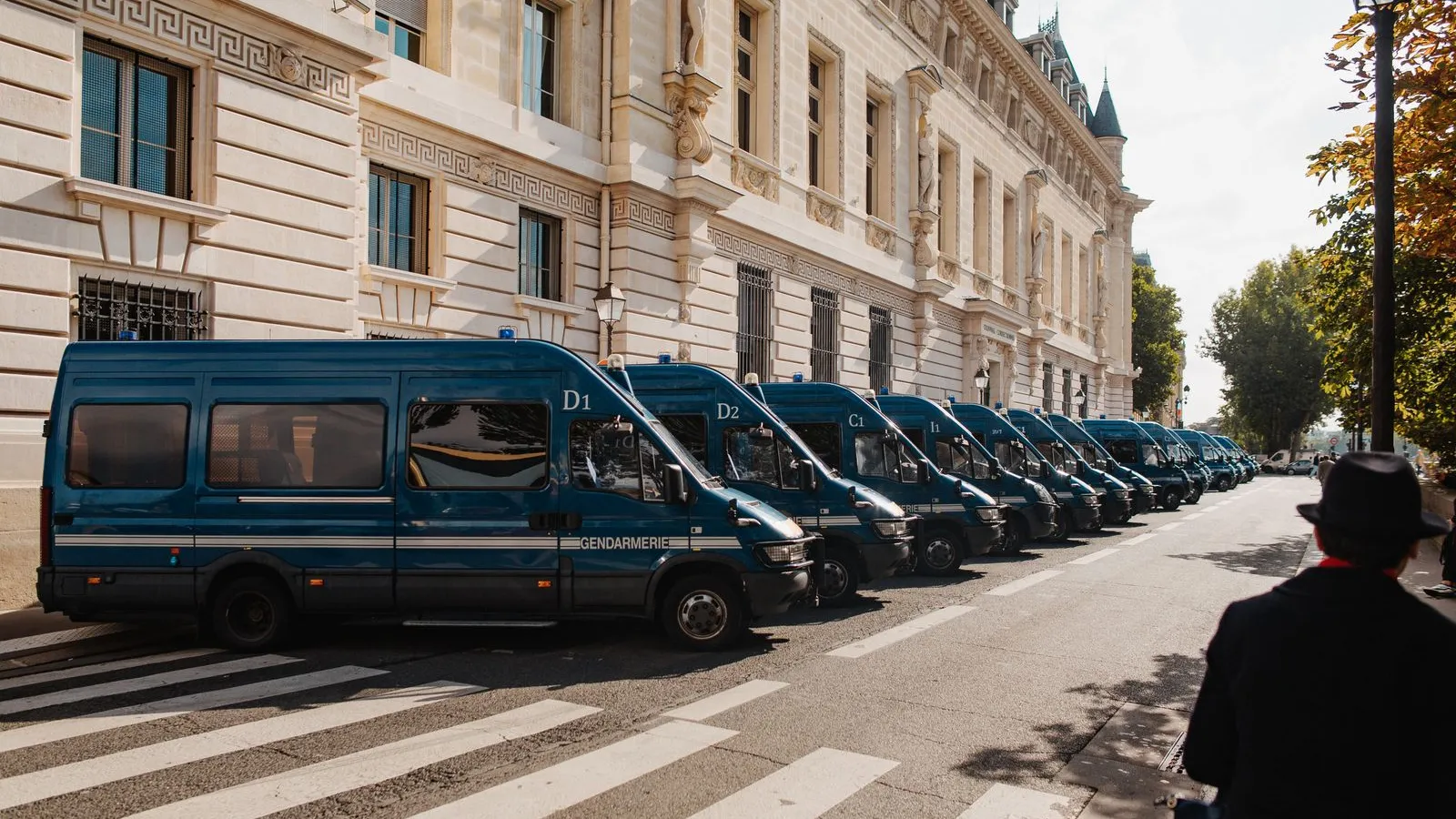
Lyon has banned "all protests" on Saturday. Not the rioters. All of them. Grenoble, Rouen, Le Havre and Toulon have cleared their city centres of demonstrations. In Paris, Saturday's march may start at Bastille but may not walk into the centre. And on Thursday the police tried to ban a march by students, the very young people Macron had spent several paragraphs of his address telling the nation he "understood", until an emergency court injunction overturned the ban and the students marched anyway.
So the state's answer to a night in which it could not protect a 19th-century town hall is to tell a student union where it may walk. That is not order. That is the look of order, which is the thing French governments have always been best at producing.
Nobody sensible is against curfews in streets where shops were gutted a week ago. The problem is the sequence. On 17 October, the government has admitted, the police lost control. The interior ministry now promises "20 percent more" officers for this Saturday than last. Twenty percent more of a force that was outmanoeuvred is a promise of effort, not of competence. The mass bans exist because the state no longer trusts itself to tell a black bloc from a nurse with a placard, so it is closing the street to both.
The president who left for the Gulf
There is a second detail in that Sunday address that deserves more attention than it got. Having described "a moment of extreme gravity", Macron told the French he would continue his energy diplomacy "tomorrow morning, by going to the Gulf countries to secure our supplies". And he went: Abu Dhabi on Monday, then Bahrain and Qatar, while at home nearly a thousand police and gendarmes were nursing injuries, by the interior ministry's count. He came back with commitments for 295,000 tonnes of diesel a month, which his own office says is "just over 10 percent" of French consumption, France 24 reported. A tenth of the tank, bought in person.
He had a reason, and he said it plainly. The marchers' anger over fuel and living costs, he said, has its source in the conflict in the Persian Gulf, "in which France has not taken part and whose consequences we suffer". He added that this anger is being expressed "in several other capitals in Europe" too.
He is right about that, and it should worry Brussels more than it worries Paris. This week Italy's government ordered 500 soldiers into Milan after its own cost-of-living riots. The energy shock is continental. Yet a Union that spent a decade telling member states it would manage their energy market, their carbon price and their fiscal rules for them has, at the moment of the shock, nothing to offer a French pensioner at the petrol pump except a reminder that France is under an excessive deficit procedure. When it really matters, the national leader still gets on the plane to buy the gas himself.
The bill underneath the barricades
Strip away the smoke and this is a fiscal story. France's public debt reached €3,595.5 billion at the end of June, or 119.0% of GDP, according to Insee. Sébastien Lecornu's minority government is trying to find about €54 billion in savings in its 2027 budget, CNBC reported. On Tuesday the National Assembly put the state budget on pause and moved on to social security, and the prime minister let it be known that a compromise remained possible in December. December. In a country whose streets are boarded up in October.
This is the trap. A state that taxes and spends as much as France does still cannot keep the lights on in a town hall, and it cannot cut either without someone setting fire to something. Every party knows it, which is why every party is now talking about the street instead of the budget.
The ones who benefit are obvious. Marine Le Pen, topping the polls for the April–May presidential election, says the government is too soft. Jean-Luc Mélenchon blames "non-stop brutal repression", France 24 reported. One wants more order and the other wants less, and both are counting on Macron's government being unable to provide either.
Six months
Macron ended his address with a warning: "We are six months from our presidential election. Six months." Anyone telling the French that the urgent thing is to take to the streets, he said, wants only "to damage the Republic and steal the debate".
There is a version of that sentence that is true. Rioters do steal the debate. But so does a government that answers a riot by banning marches, a president who explains the crisis by pointing at the Gulf, and a budget that may yet be forced through by ordinance in December. The debate France needs, on what its state should do and what it can stop doing, has not been stolen by the black bloc. It has been postponed by the people in charge, one more time.
Justice minister Gérald Darmanin said on Thursday that 217 of the roughly 2,700 people arrested since last weekend had been locked up and 1,000 more were being prosecuted. Good. Those who burned Limoges should pay for it, as Macron promised. But a republic is not judged only by how many rioters it jails. It is judged by whether the law-abiding majority can still walk down their own high street on a Saturday. In Lyon this weekend, they cannot.