
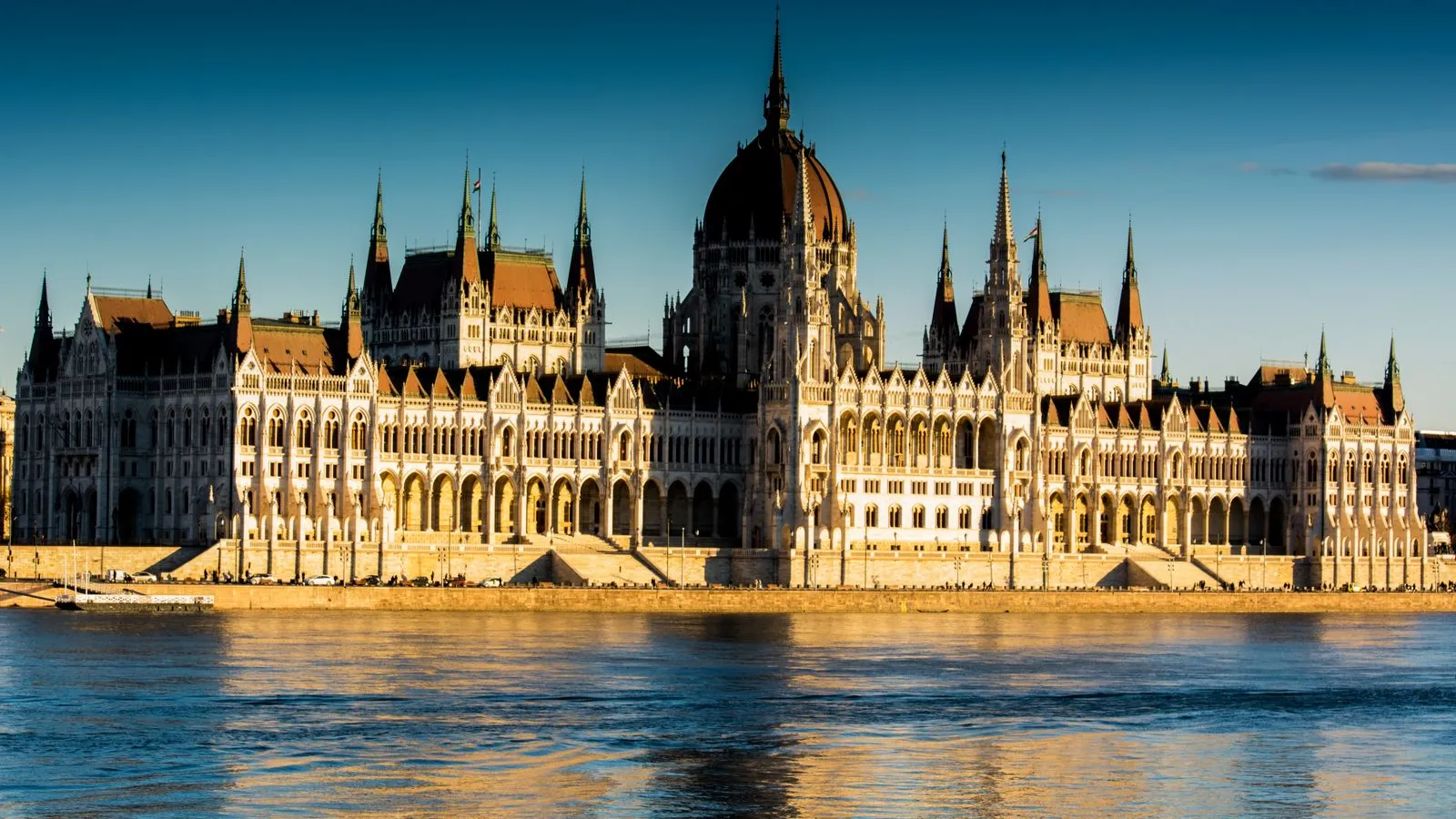
On 23 October 1956, students marched through Budapest with a list of demands. Within days they had a government that promised free elections, and on 1 November Imre Nagy declared that Hungary was leaving the Warsaw Pact and would be neutral. On 4 November the Soviet tanks came back. Nagy was hanged two years later. The revolution lasted less than a fortnight, and it has been fought over ever since by everyone who wants to claim it.
Today, seventy years on, the newest claimant arrives in person. Ursula von der Leyen, the President of the European Commission, is in Budapest for the anniversary and is expected to speak, alongside the President of the European Council, António Costa. It is her first visit to Hungary since 2024, Euronews noted, and it is being billed as the moment Brussels and Budapest finally made up.
There is something worth celebrating here. There is also something worth noticing, and the official pictures will not show it.
The capitals stayed home
Péter Magyar, whose Tisza party ended Viktor Orbán's sixteen years in power in April, invited every European leader except Vladimir Putin. Look at who actually came. Emmanuel Macron, whom Magyar had announced as a guest, is not coming; the French embassy told the Hungarian outlet Telex that his visit had never been officially confirmed. Giorgia Meloni is sending her defence minister, Guido Crosetto. Friedrich Merz is sending his transport minister. Most delegations are led by ministers, speakers of parliament and state secretaries, Telex found.
Macron has a country on fire and an excuse. But the result is a revealing photograph. The "European" face at Hungary's great national day will not be its fellow nations. It will be the two presidents of the institutions in Brussels. The thaw being celebrated is not, in the first place, between Hungary and France or Hungary and Germany. It is between Hungary and the Commission.
What the thaw cost
And that thaw has a price tag, because it was negotiated like one. In May, Magyar and von der Leyen agreed on the release of a total of €16.4 billion in frozen EU money in exchange for reforms and investment plans, Euronews reported. On 13 October the first big tranche came through: the Council closed the rule-of-law conditionality procedure opened against Orbán's government, unlocking €4.2 billion and letting Hungarian students and researchers back into Erasmus+ and Horizon Europe. "A new chapter starts today," von der Leyen wrote.
The Hungarian government's own account of that day contains a sentence Brussels will not be quoting this afternoon. When the funds were frozen in December 2022, it says, the freeze covered €6.3 billion. Under the EU's own budget rules, roughly a billion of that was lost every year. By 2026, €4.2 billion was left.
Read that again. Brussels froze Hungary's money to punish a government it accused of corruption. That government's ministers kept their jobs for more than three years. The money that quietly expired in the meantime, about two billion euros, was not Orbán's. It was earmarked for investments in Hungary, for Hungarians. That is what conditionality looks like from the receiving end: the voters pay the fine, and they get the rest back only once they have elected a government Brussels approves of.
To be fair to Magyar's government, it has done real work. It says it amended more than a hundred laws, strengthened the anti-corruption Integrity Authority, tightened asset declarations and began dismantling the foundations that Orbán used to park universities and public assets beyond the reach of future governments. It is also joining the European Public Prosecutor's Office, which was not even a condition. A good deal of this is exactly what a country should do for its own sake.
But the bigger cheques are still in the post. The €10 billion in pandemic recovery money and €2.2 billion linked to academic freedom are still being assessed by the Commission. And the political gifts have already been delivered: Magyar's government has called Russia a security threat and approved opening four negotiating clusters in Ukraine's EU accession talks, Euronews reported, after years of Orbán's vetoes. You can think all of that is right and still notice that the reward is being handed out on a stage in Budapest by the institution holding the purse.
Whose revolution is it?
Orbán spent years turning 1956 into a story about Hungary standing up to foreign powers, and in the end he wore it out. He rallied against "Brussels" so often that the word lost its meaning, while his friends grew rich and his country's money sat frozen. Hungarians noticed, and in April they threw him out. That was not a victory for Brussels. It was a victory for Hungarian voters, who did the one thing no Commission procedure could ever do.
That is the point the speeches today are likely to blur. The young people of 1956 did not want to swap one distant centre for another, however much friendlier. They wanted to govern themselves: free elections, their own government, neutrality, the Soviet troops gone. The European Union is not the Soviet Union, and anyone who says so has lost the argument. But a revolution about national self-government deserves better than to be turned into the backdrop for a funding reconciliation.
So welcome, Madam President. Lay the wreath. Say the right things about courage and freedom. Then perhaps remember, on the plane home, that the Hungarians who made this day famous were not asking anyone's permission, and that the €2 billion your rules let expire was theirs.