
There is a particular kind of European diplomatic triumph that consists entirely of having been in the room. On Wednesday the European Commission's chief spokesperson, Paula Pinho, delivered one. Asked about the Ukraine talks in Oslo the evening before, she told reporters, according to Eunews, that "the really important thing is that we are sitting at the table".
Within a day and a half of that dinner, Moscow had replied to what was said at that table. Not with a counter-proposal. With ballistic missiles over Kyiv.
Who was actually at the table
The Norwegian government's own readout is worth reading slowly. On Tuesday 20 October, Prime Minister Jonas Gahr Støre, Finnish President Alexander Stubb, President Volodymyr Zelensky and the US special envoy Steve Witkoff met in Oslo. Jared Kushner joined by video from the United States. The national security advisers of the United Kingdom, Germany, Italy, the EU and NATO "joined the discussions at a working dinner". The Commission, Eunews reports, was represented by Ursula von der Leyen's head of cabinet.
So the two Nordic leaders were there in person, and the continent's big capitals sent their advisers for dinner. That is not a scandal. Advisers do the real drafting. But it is a strange thing to boast about, and a revealing one. When the EU's executive has to tell the press that it was present, it is telling you how often it is not.
The agenda, in Oslo's telling, was "Ukraine's security, a post-war prosperity plan, and territorial questions". Witkoff took what came out of it to St Petersburg the next day.
The Kremlin's review
Vladimir Putin received him on Wednesday. Afterwards, the Kremlin aide Yuri Ushakov gave the reviews. Witkoff, he said according to the Guardian, had briefed Putin on "some new aspects in the approaches of the Europeans and Kyiv". Then came the verdict: "there wasn't really much substance in them". To Reuters he put it a little more elegantly: "these nuances, so to speak, do not entirely satisfy us."
Moscow said it was ready "in principle" to resume US-mediated talks with Ukraine in mid-November, after the American midterms. Donald Trump called it "the closest we've been" to ending the war. Witkoff, who had just watched Putin release the jailed American Stephen Hubbard, called the Russian president a "humanitarian". That drew a Republican senator, Thom Tillis, to post a three-letter response on X that this newspaper will not reprint.
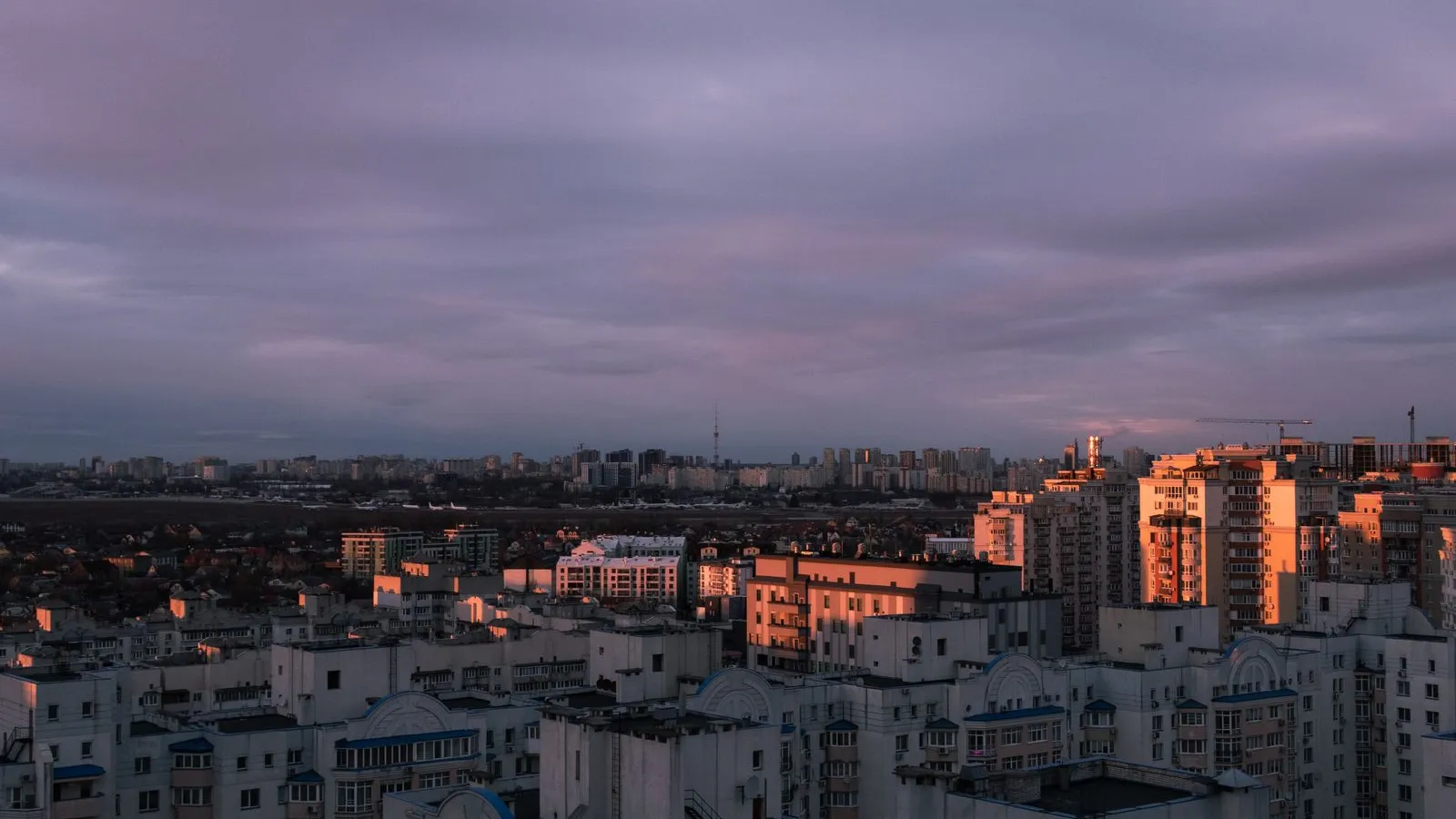
Then night fell over Kyiv.
The reply, delivered overnight
Zelensky said on Thursday that Russia had fired 21 missiles at 12 regions of Ukraine. Three of the ballistic missiles fired at Kyiv, he said, carried cluster warheads. "The distinguishing feature of these missiles is that they detonate in the air as they approach the target, striking everything within a 400-meter diameter," he wrote on X, as quoted by CBS News. In the Kyiv region, two people were killed and 34 injured, including five children, according to Zelensky's figures reported by DW. Kyiv's mayor, Vitali Klitschko, said the metro infrastructure on the Southern Bridge over the Dnipro was damaged.
Ukraine, it should be said, was not idle either: Russia's defence ministry claimed it downed 808 Ukrainian drones overnight, many aimed at Moscow. This is a war, not a morality play. But only one side had just been handed a peace paper, and only one side answered it with cluster munitions over a capital.
Ukraine's foreign minister, Andrii Sybiha, supplied the line of the week: "Appeasement, servility, and flattery will not stop this war. Only strength will." Zelensky put it more drily: "when Russia responds to negotiations with ballistic missiles, real pressure on Russia is needed".
Europe's problem is not its seat. It is its hand.
Here is the uncomfortable part for Brussels. Europe's ideas were dismissed not because they were badly drafted, but because Moscow has looked at what stands behind them and found it thin.
Consider the same week's other headline. According to the Wall Street Journal, Elon Musk ordered a slowdown of the military-grade Starlink service that Ukraine's forces depend on. Asked about it, US Secretary of State Marco Rubio said decisions on Ukraine's access were up to SpaceX, not the White House. The Commission's answer, from another of its spokespeople, was that "SpaceX must urgently restore full operational capacity" and that Europe is "actively working on the development and deployment of a constellation comprising over 300 satellites". A week earlier, the EU's foreign-policy chief Kaja Kallas had been blunter: "in the short term Europe is unable to replace it."
That is the whole story in miniature. A continent of 450 million people, with an economy many times the size of Russia's, can draft peace terms over dinner, but cannot keep Ukrainian drones connected without the goodwill of one American billionaire. Putin knows this. So does Washington. The only people who seem surprised are the ones issuing press lines about the table.
There are serious things Europe could do this winter, and none of them involve a press briefing. It could buy and deliver air defence interceptors at the pace the Ukrainians are begging for, instead of at the pace of tender procedures. It could stop treating the space constellation as a 2030s industrial policy and treat it as a 2027 military need. It could decide, as a matter of national budgets rather than Commission communiqués, who pays for Ukraine's defence next year. On Thursday NATO did one small, practical thing: it said Ukraine may now buy weapons through the alliance's procurement agency, NSPA, in a partnership with Belgium, Luxembourg, Norway, Sweden and the UK. That is what useful looks like.
A seat is not leverage
None of this means Europe should stay away from Oslo. It should be there, and it should be there with its leaders rather than their advisers. But the lesson of this week is old and simple. In negotiations with a man who answers a peace plan with ballistic missiles, the value of a European proposal is set by the weapons, money and satellites behind it, not by the menu at the working dinner.
Brussels was at the table. Moscow checked what Europe had brought to it, and sent its answer over Kyiv in the dark.