
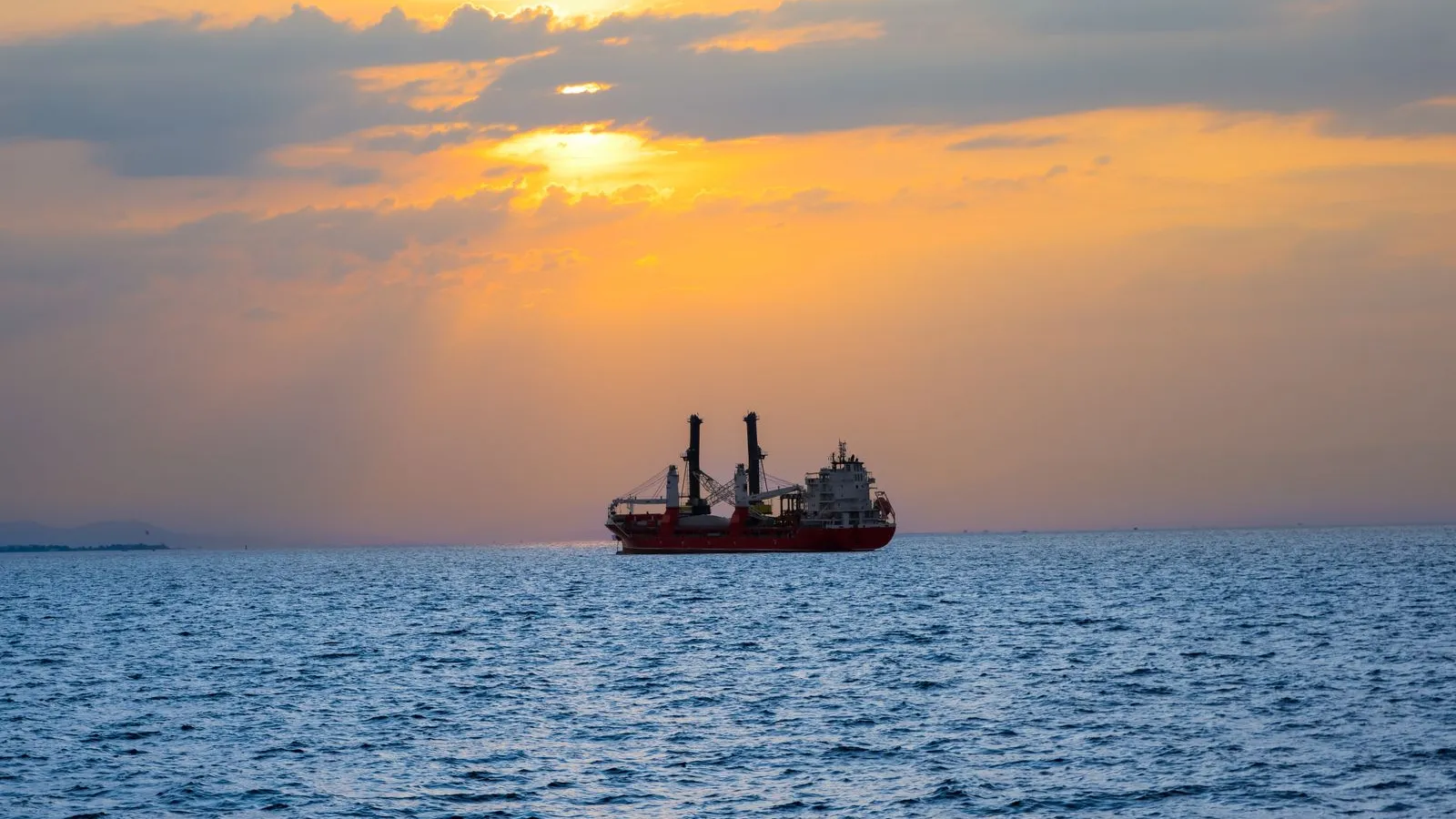
On Tuesday, Russia's military said something out loud. It had struck three cargo vessels in the Ukrainian Danube port of Reni, and two more ships heading for Odesa, the Guardian reported. No euphemism, no "unidentified", no denial. Moscow is hunting merchant shipping in the Black Sea, and on that day it said so.
The same Tuesday, NATO ambassadors met in Brussels to discuss the drones that have been hitting ships off the coasts of two of its own members, Romania and Bulgaria. They came out with a plan for more planes, more radar and more forensics, and a vocabulary that still could not bring itself to name the culprit.
A sea full of "suspected" drones
The tally is grim. According to the Guardian, at least five cargo ships were hit near the Romanian and Bulgarian coasts in the past two weeks, with 23 sailors reported dead or missing. Last week two chemical tankers anchored near the Sulina canal, the Danube's mouth into the sea, were set ablaze. Seven more sailors were reported missing, according to Al Jazeera. On 5 October, Romania reported two people dead after their ship caught fire and sank. The London insurance market now treats almost the entire Black Sea as a high-risk zone. The exceptions are the territorial waters of Romania, Bulgaria and Turkey.
Romania's defence minister, Radu Miruță, was unusually specific after his jets shot down two drones over Romanian territory at the weekend. "The ones from last night were flying at 450 km/h, which leads us to think they were Russian-made Geran-4 drones with a turboprop engine," he said. Romania counts 35 unauthorised drone incursions this year, against nine in 2025.
Bulgaria, after a vessel sank off its coast on 13 October, summoned Russia's ambassador, Reuters reported. Sofia has asked NATO for combat aircraft and anti-drone systems. It has also proposed a "moratorium" on attacks on civilian ships, as if the problem were a misunderstanding about the rules.
And yet the official line holds. NATO, Romania and Bulgaria "have not directly attributed" the attacks to any country, as Al Jazeera put it. The maritime risk firm Ambrey estimates Russian forces are responsible for 80 percent of them. The EU's foreign-policy chief Kaja Kallas manages "six attacks in 10 days by suspected Russian drones". Suspected. When a drone looks Russian-made to a NATO government's own defence minister, flies like a fighter jet and hits ships that serve Ukrainian ports, Europe still prefers the passive voice.
Situational awareness, the alliance's favourite answer
NATO's new package is real. Allies "have or will send additional maritime patrol aircraft, radar systems, explosive exploitation teams, intelligence personnel, drones and more," said its spokesman, Colonel Martin O'Donnell. France sent a maritime reconnaissance aircraft to Romania on 18 October. Bulgaria, Romania and Turkey are widening their joint mine-clearing group to watch over undersea pipelines and cables.
Then O'Donnell added the sentence that gives the game away. "The most important thing we can do, however, is to increase our situational awareness in the region through increased sensors and data sharing."
Situational awareness is a fine thing. It means you can watch the ship burn in high definition. What it does not mean is that the drone gets shot down before it hits, or that the people who launched it pay any price. Mark Rutte promised last week that NATO would keep "adjusting our deterrence and defence posture as needed". The ships keep sinking while the posture is adjusted.
Why the fog suits everyone except the sailors
There are reasons for the caution, and they deserve a fair hearing. Most of the strikes, the Guardian notes, happened outside NATO territorial waters. Attribution is a legal act with consequences. Name Russia, and the obvious next question is what the alliance intends to do about it. Few in Brussels want a debate about Article 4, never mind Article 5, over a burning bulk carrier in an economic zone. The Black Sea is also awkward ground: the 1936 Montreux Convention sharply limits how many and how long warships from outside the region may sail there, so the alliance cannot simply flood it with frigates.
But the fog has a cost, and Moscow is the one cashing in. Deterrence works by making the other side certain about consequences. Europe's language does the opposite. It tells the Kremlin that it can hit ships near NATO coasts and the response will be a sensor, a summoning, and a proposal for a moratorium. Every time a European minister says "suspected", the Russian denial is accepted by default.
The motive is no mystery either. Kallas herself said the Kremlin is probably trying to choke off Ukraine's grain revenue. That is economic warfare against a country Europe has promised to stand behind, fought on the doorstep of two EU and NATO members. If Europe cannot keep a grain corridor open off Constanța, its talk of strategic autonomy is decoration.
What a serious answer looks like
Start with words, because they are cheap and they matter. When national governments and NATO intelligence are confident, say it: Russian drones. Bulgaria and Romania have earned the right to hear their allies say it with them.
Then put shooters, not just sensors, where the drones fly. Romania has now downed six drones this year, against none last year. That is capability Europe can multiply quickly. Counter-drone systems and air patrols over the western Black Sea are exactly what Sofia asked for. The alliance should treat that request as an emergency, not as one more item for the ambassadors' agenda.
And make the Kremlin's maritime campaign expensive somewhere it notices: the shadow tankers that carry its own oil through European-adjacent waters.
Moscow is not hiding what it does in the Black Sea. On Tuesday it put out a statement about it. The least Europe can do is stop being more discreet about Russia's attacks than Russia is.