
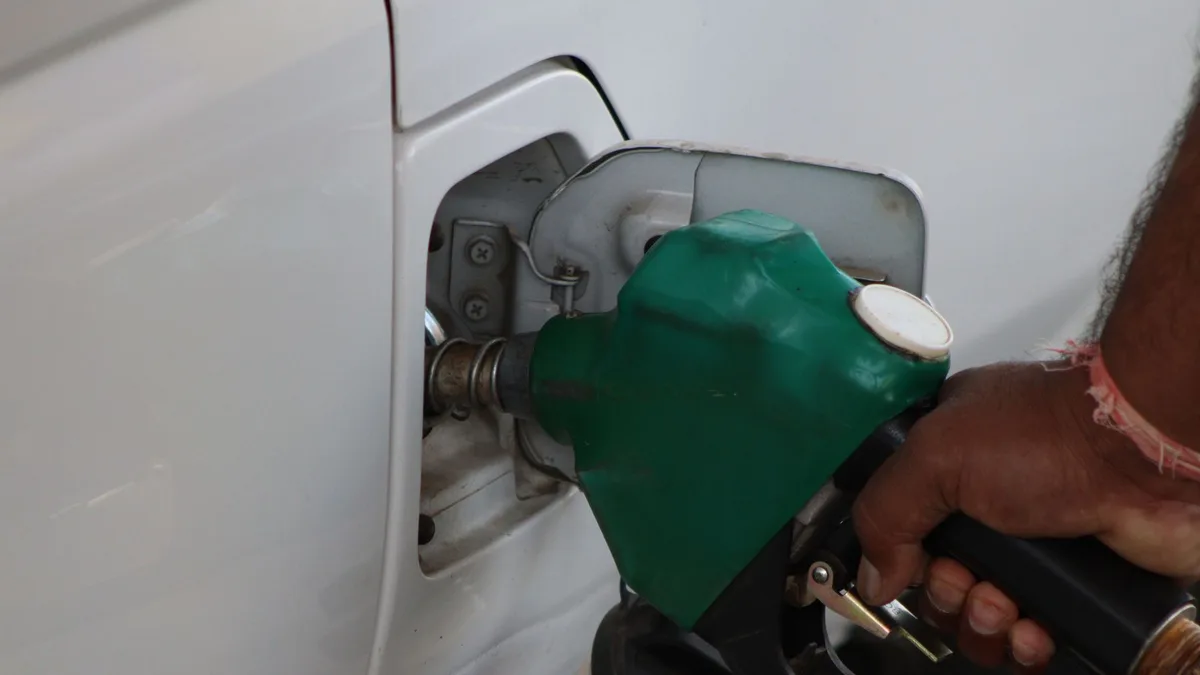
For three years, the message from Brussels was simple enough to fit on a bumper sticker. From 2035, every new car sold in the European Union would have to emit zero CO2 from its tailpipe. In practice, that meant the end of new petrol and diesel cars. Anyone who doubted it was told the debate was over, the law was written and the future was electric.
This week the debate turned out not to be over at all.
On Thursday, 22 October 2026, two committees of the European Parliament, transport and industry, adopted a compromise struck by the three groups that usually run the place: the centre-right EPP, the Socialists and the Liberals. It lowers the 2035 target for new cars from a 100% cut in fleet emissions to a tailpipe cut of 87.5% compared with 2021. The EPP did not bother with euphemism. Its press release says the group "is delivering on its promise to reverse the combustion engine ban."
Good. But before anyone pops the champagne, look closely at what has replaced the ban, because it tells you everything about how the EU makes policy.
The magic numbers
Here is the new arithmetic, as described by the lead negotiator, Italian EPP MEP Massimiliano Salini, to Eunews. Carmakers must cut tailpipe emissions by 87.5% by 2035. A further 7.5 points can be offset by using low-carbon steel made in Europe. The last 5% is "unconditional", which, in Salini's words, leaves open "the possibility of registering cars with internal combustion engines without any offsetting obligations".
Then come the extras. A new category called VEEF, for vehicles running exclusively on eligible renewable fuels, which would count as zero-emission alongside electric cars. Small cars made in Europe earn a "super-credit" of 1.4. Small vans made in the EU get 1.2, rising to 1.4 later. Vans as a whole get softer targets too: 35% by 2030 and 80% by 2035, according to Agence Europe.
Read that list twice and you notice what has happened. The old rule was crude but clear: zero. The new rule is a dashboard of dials, credits and multipliers that will employ compliance consultants for a generation. Brussels has not given up planning the car market. It has just made the plan more complicated.
The Commission had already blinked
None of this came out of nowhere. In December 2025 the Commission itself proposed0995_EN.pdf) cutting the 2035 goal from 100% to 90%, with the remaining tenth to be offset through low-carbon steel and renewable fuels. Parliament's centre has now gone further.
Think about what that sequence means. A target that was presented as settled in 2023 became 90% in 2025 and 87.5% in 2026. That is not physics. That is haggling. And haggling is fine; it is what democratic politics is for. What is not fine is pretending, every single time, that the current number is the one carved in stone.
The honest version would have been to admit years ago that a law dictating which engine Europeans may buy in 2035 rested on assumptions nobody could guarantee: that batteries would get cheap fast enough, that charging points would appear on every street, that Europe's own carmakers would win the electric race rather than watch Chinese brands drive into their showrooms. Several of those bets are not going Europe's way.
Who really won
The winners are obvious. Drivers who want a hybrid or a combustion car after 2035 will, if this survives, still be able to buy one new. Suppliers in Germany, Italy and central Europe who make the parts for those engines get a future that was being legislated away. The EPP gets to say it kept a campaign promise, and its transport spokesman Jens Gieseke duly said the deal "shows that Europe's political centre can deliver."
The less obvious winner is the steel lobby. Turning EU-made green steel into a currency that carmakers can spend against their CO2 targets is industrial policy dressed up as climate policy. Perhaps it works. But it means a car's legal standing in 2035 will depend partly on where the metal in its chassis was smelted. Liberal MEP Pascal Canfin argued the steel credits make the deal "much more interesting" in terms of overall emissions, Agence Europe reported (our translation from the French). Maybe. It also hands Brussels a brand-new lever over two industries at once.
And the Socialists and Liberals? They signed up because, as Brussels Signal reported, the alternative on the table was a right-wing majority ready to scrap the phase-out altogether. That is the real story of this Parliament: the EPP now has two possible majorities, one with the centre-left and one with the right, and its partners know it. On methane the same week, it simply went with the right.
Not done yet
A word of caution before anyone rewrites their car-buying plans. This is a committee vote. The environment committee is due to vote on 4 November and, if it agrees, a plenary vote is likely in December, the EPP says. After that come negotiations with national governments. The numbers could still move.
But the symbolic fight is over. The idea that a group of officials and MEPs could decree, a decade in advance, the death of a technology hundreds of millions of people still rely on has run into reality: prices, voters and factories. The replacement is a more complicated set of rules. It is still better than the absolute ban it replaces.
The next time Brussels tells you a debate is closed, remember the petrol car. It was declared dead in 2023, and three years later the people who wrote it off are voting to keep it.