
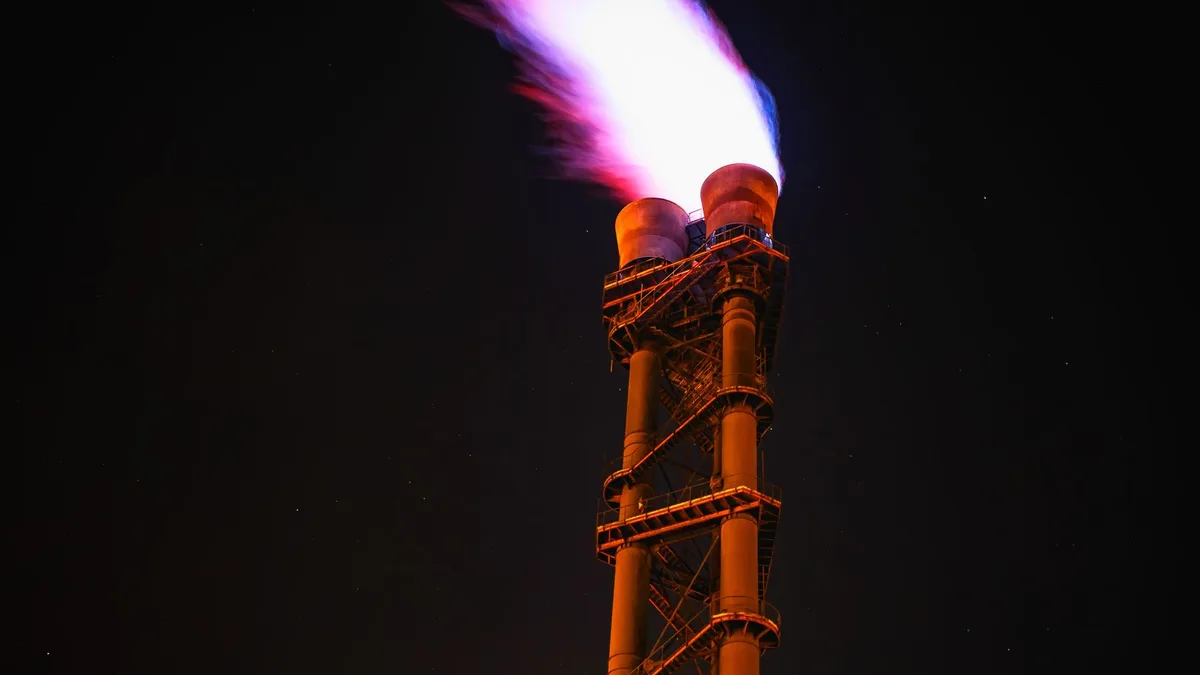
In the spring of 2024, the European Union passed a law with a breathtaking premise. From 2027, anyone importing oil, gas or coal into the bloc would have to prove that, for contracts signed since August 2024, the producer, whether in Texas, Qatar or Algeria, measured, reported and verified its methane leaks to European standards. Brussels would not just police its own pipes. It would set the rules for everybody else's.
On Thursday, 22 October 2026, the European Parliament voted to push the heart of that law back to 2031. The vote fixes the Parliament's position for talks with national governments; it is not yet law, but the direction of travel is unmistakable.
That is three years, not the one the Commission had asked for only eight days earlier. Read the small print of how Europe got here and you learn something more useful than any climate target: what happens when a continent that buys its energy legislates as if it sells it.
The confession in the explanatory memorandum
The most honest sentence in this saga was written by the Commission itself. In its proposal of 14 October to amend Regulation (EU) 2024/1787, it admits that importers "might therefore not be in a position to secure sufficient compliant energy supplies as of 1 January 2027."
Translate that out of Commission-speak. The rule written to make foreign suppliers clean up their act risked doing something else first: leaving Europe without enough gas that passed the test. With shipping routes in the Middle East disrupted and prices high, the paperwork had become a supply risk.
The Commission still insists, on its methane policy page, that the delay "does not affect the ambition, integrity, and scope of the regulation". That is a remarkable thing to say about a law whose main import obligation has just been pushed out of this decade's calendar. Ambition, it turns out, is the one part of an EU law that never needs a deadline.
Parliament outbids the Commission
Then the European Parliament took the Commission's modest retreat and turned it into a rout. Under amendments tabled by the centre-right EPP, importers would only have to prove their oil and gas meets EU monitoring standards from 2031 instead of 2027, and reporting on methane intensity would slide from 2028 to 2031, EUobserver reported. A cross-party group of Romanian and Bulgarian MEPs added a three-year delay for Europe's own oil and gas operators too. The text passed with a margin of more than a hundred votes, carried by the EPP and the groups to its right, while Socialists, Liberals, Greens and the Left mostly voted against, according to the roll-call record.
The EPP's energy spokesman, Christian Ehler, put the argument plainly: "This is not about increasing or permitting further methane emissions, it is about security of supply and lower energy prices," he said, quoted by Euronews. Jutta Paulus, the Green MEP who negotiated the original law, called the three-year delay "an absolute scandal".
Both of them are, in their way, right. That is the problem.
Who's being scandalous here?
Mr Ehler is right that a household in Bratislava or Bari cares more this winter about whether the gas arrives than whether a well in another hemisphere has filed its methane-intensity data in the approved format. Ms Paulus is right that a law which is delayed every time it might bite is not much of a law.
But the scandal is not Thursday's vote. The scandal is 2024. The methane regulation was written in a moment of confidence, when Brussels believed its market was so large that the world's producers would simply fall into line. Nobody seems to have asked the obvious question: what if the world's producers have other customers, and Europe, short of gas and paying through the nose, has fewer suppliers than it thought?
Europe's biggest LNG supplier is the United States, and the Commission had already been under pressure from Washington over these rules, as Euronews notes. When the customer needs the cargo more than the seller needs the customer, the customer does not get to write the seller's rulebook. That is not cynicism. It is the definition of bargaining power, and Europe spent the last two years handing its own away.
The one amendment that makes sense
There is a neat irony buried in the vote. MEPs also backed an amendment, tabled by Dutch Socialist Mohammed Chahim, stating that the extra time should not apply to oil, gas and coal from countries under EU sanctions, which in practice means Russia, EUobserver reports.
In other words, the Parliament has worked out the one case where Europe's leverage is real: a supplier it has already decided to shut out. The rule is strict precisely where it costs nothing. Everywhere else, where enforcing it might mean a cold flat or an idle factory, it is postponed.
Capitals can't even agree to wait
Meanwhile the governments, the people who actually answer to voters about heating bills, could not agree on anything. EU ambassadors failed to settle a common position on Wednesday 21 October, and talks are due to resume on 28 October, Agence Europe reported. Some capitals want one year, at least 15 want three, according to the EPP. The dossier is being rushed through under an urgent procedure so the changes can take effect before the end of the year, which is when the 2027 deadline would otherwise start to bite.
So the EU is now racing against a cliff edge it built itself, using an emergency procedure to suspend the core of a law that is barely two years old.
The lesson Brussels keeps not learning
None of this means methane does not matter. Leaks from oil and gas infrastructure are a real problem. A sensible Europe would fund satellite monitoring, strike deals with the suppliers it actually depends on, and fix its own leaky wells first.
What it should stop doing is writing laws that assume the rest of the planet will do as it is told, then quietly unwriting them when the bills arrive. Every such climbdown teaches Washington, Doha and Algiers the same thing: wait, and Brussels will blink.
The methane regulation will now probably live to 2031 on paper. The credibility of the next grand EU rule for the world has already taken the hit.