
Andrei Sakharov was a Soviet nuclear physicist who became the most famous dissident of his age. He was harassed, exiled to the closed city of Gorky, and kept away from the world for his views. When the European Parliament named its human-rights prize after him in 1988, the idea was simple: shine a light on a brave individual whom a regime would rather silence.
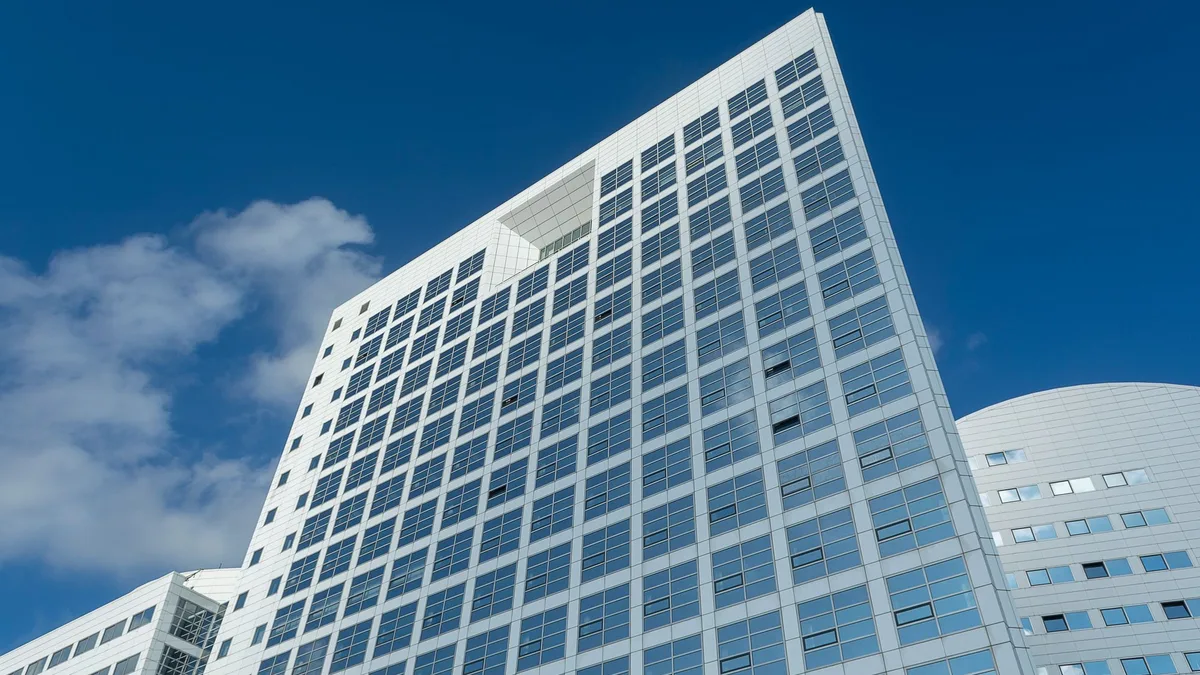
On Thursday, 22 October 2026, the Parliament gave the Sakharov Prize for Freedom of Thought to an institution with a headquarters, a budget and a staff of judges and prosecutors: the International Criminal Court in The Hague.
One of the two other finalists was Tundu Lissu, Tanzania's best-known opposition leader. He is on trial for treason. A three-judge panel of Tanzania's High Court will deliver its verdict on 6 November, The EastAfrican reported. The EPP, which nominated him, says he "continues to face the death penalty" and has been detained for more than 500 days.
Fifteen days before a man who, by the EPP's account, could face a death sentence hears his verdict, Europe's freedom prize went to a court that already has a building.
How the vote went
The laureate is chosen by the Conference of Presidents, Roberta Metsola and the leaders of the political groups, with votes weighted by the size of each group. According to Agence Europe, the centre-right EPP and the conservative ECR stuck with Lissu. The Socialists, who nominated the ICC, the Liberals, the Greens and the Left backed the court. The Patriots for Europe, whose own candidates were the Iranian activists Taraneh and Romina Rahimi, abstained in the second round.
So the result was not a groundswell. It was a parliamentary arithmetic problem, and the right-wing abstention handed the left its win.
The timing was not accidental either. Washington imposed sanctions on the court itself on 9 October, Agence Europe notes. The Associated Press put it plainly: the court won the prize "days after Trump targets tribunal". Metsola, announcing the prize, said "the European Parliament recognises the Court's important work in upholding international law and justice".
The prize is for people
Look at the Parliament's own list of recent laureates. Last year it went to two jailed journalists, Andrzej Poczobut of Belarus and Mzia Amaglobeli of Georgia. Before that, to Venezuela's María Corina Machado and Edmundo González, to the movement that grew around Jina Mahsa Amini's death in Iran and, in 2021, to Alexei Navalny. People in prison or in hiding, for whom international attention can be the difference between being forgotten and being protected.
That is what the prize is good at. A dictator can ignore a resolution. It is harder to ignore a laureate whose name has been read out to applause in Strasbourg, and whose ceremony in December will be covered by the world's press.
The ICC does not need that kind of protection. It has more than 120 member states, diplomatic standing and, whatever one thinks of its recent decisions, lawyers who can defend it. Lissu has a courtroom in Dar es Salaam and a date.
Gesture instead of power
There is a serious argument about the ICC. It has an arrest warrant out for Vladimir Putin over the deportation of Ukrainian children, and one for Israel's Benjamin Netanyahu, which many European conservatives consider a grave mistake. Reasonable people disagree about the court. That is precisely why handing it a human-rights prize is a political act, not a moral consensus.
But the deeper problem is what the gesture replaces. If the EU believes US sanctions on the ICC are an attack on European interests, it has real tools. Several MEPs want the Commission to activate the EU's blocking statute, the law designed to shield European firms and institutions from foreign sanctions, Agence Europe reports. The Greens' Mounir Satouri attacked the Commission's inaction.
That is the tell. The Parliament has chosen the one response to Washington that costs Europe nothing: an award, a ceremony and a press release. Whether the court can still pay its staff and use its software under US sanctions is a question for the Commission and the governments, and on that front, critics such as Satouri say, there has been little to show.
A prize that has lost its focus
None of this is a criticism of the judges in The Hague, who are doing their jobs under pressure. It is a criticism of a Parliament that increasingly treats its prizes and resolutions as instruments of foreign-policy signalling, mostly aimed at whichever American president it dislikes.
Sakharov himself spent years in internal exile because he stood alone against a state. The prize in his name was designed for people like that. This year, Europe had one on the shortlist, an opposition leader awaiting a treason verdict, and preferred to send a message to the White House.
On 6 November, a court in Dar es Salaam will deliver its verdict. Europe's MEPs will have to hope it goes the right way, because this year their prize went to The Hague instead.