
On 4 November 1956, Soviet tanks rolled into Budapest to crush the Hungarian revolution. Seventy years to the day, Hungarians could sit at the kitchen table, open a laptop and type their grandfather's name into a search box to find out whether he had been one of the regime's informers.
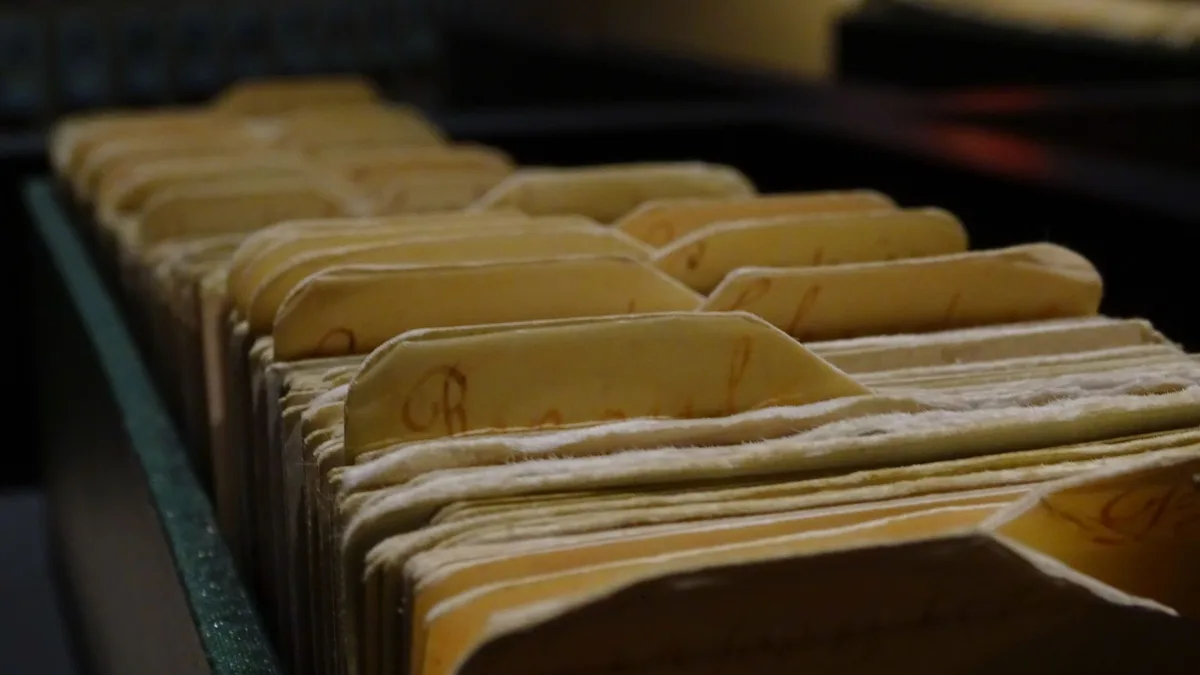
The website is called nyitottaktak.hu, "open files". Since Wednesday it has carried the names of around 50,000 to 60,000 people recruited by communist state security. A typical registration card, the BBC reports, lists the informer's real name, codename, date of birth, address and mother's name, why they were recruited (voluntarily, through blackmail or under pressure) and the name of the officer who handled them. More than 9,000 recruitment dossiers, with far more detail, are due on 25 February.
It is a good day for Hungary. It is also an awkward one for anyone on the right who spent the past sixteen years treating Viktor Orbán as Europe's great anti-communist.
The anti-communists who kept the drawer shut
Orbán made his name in June 1989 by standing up at the reburial of Imre Nagy and demanding that Soviet troops go home. Anti-communism was the founding brand of his party. So you might expect Fidesz to have opened these files the moment it got its two-thirds majority in 2010.
It did the opposite. According to the Hungarian outlet Telex, cited by DW, Fidesz voted more than 30 times against opening the files after 2010. To be fair, it was hardly alone: as the BBC notes, conservative, Socialist-Liberal and Fidesz-led governments all considered the idea and all walked away from it. Hungary's first post-communist prime minister, the conservative József Antall, said no as well.
What Hungary got instead was the worst of both worlds. Since the late 1990s citizens could request their own files, but, as the BBC notes, many names were blacked out and many files were held back by the post-communist secret services for their own use. Politicians, meanwhile, got a filing cabinet full of ammunition. In 2002 the socialist prime minister Péter Medgyessy was exposed as a former secret agent by Magyar Nemzet, a Fidesz-friendly daily. Péter Magyar, the new prime minister, put it bluntly on Wednesday: for decades, he said, keeping the files closed created "opportunities for political hysteria, blackmail, the exertion of pressure, and silencing."
A locked archive does not protect the past. It turns it into a weapon for whoever holds the key.
The foreign-agent hunters
Then comes the detail that writes its own satire. DW reports that József Horváth, a former full-time employee of the state security department responsible for suppressing the domestic opposition, worked under Orbán as an intelligence officer and security adviser. In 2024 he became research director of the Sovereignty Protection Office, an agency that, in DW's words, exposed supposed enemies of the government by branding them "foreign agents".
So a party that spent years hunting for foreign agents in newsrooms and NGOs voted 30-odd times against publishing the names of people who really did work for a secret police installed behind Soviet tanks.
Orbán himself says he has nothing to hide. In a Facebook statement on Tuesday, reported by Politico, he said communist officers tried to recruit him during his military service, that he refused, and that he, his wife and his colleagues were later "under constant surveillance". Rapporteur reports that a military counterintelligence card lists him as a "social contact", a category distinct from a recruited agent. Nothing published so far shows that he ever informed on anyone, and he deserves to be taken at his word. Which raises the obvious question his successor asked in September, when Fidesz declined to back the law: "I wonder why?"
A name on a card is not a verdict
Now for the conservative caution, because there is a real one.
A registration card proves that the secret police registered someone. It does not prove that the person ever informed. "Do not believe everything the state security services and their records say," warned Gergő Bendegúz Cseh, the head of the archive, as quoted by Rapporteur. The Nobel laureate Katalin Karikó has said she signed a recruitment declaration under threat and never reported on anyone. The historian László Eörsi told Euronews he knows of recruits who instead "took a huge risk by turning against the authorities", adding: "Some even could be considered proper heroes."
The release is also staggered. The bare names are online now; the dossiers that might explain them arrive only in February. That leaves a winter in which a name on a website can ruin a family's reputation before the context turns up. The government is setting up counselling hotlines. It will need them.
The answer is not to close the drawer again. It is to read the whole card, and the card includes a line that deserves more attention than it is getting: the handling officer. The system was not run by a frightened student who signed something to keep a university place. It was run by salaried officers who chose their targets and applied the pressure. If Hungary spends this winter shaming pensioners while the men who recruited them stay a footnote, it will have opened the files and learned the wrong lesson.
What Brussels could not order
There is one more lesson, for the other end of the continent.
For years Brussels fought Budapest over the rule of law through the Article 7 procedure and frozen funds. Yet the most important piece of democratic housekeeping in Hungary this year did not come from a Commission report. It came from a national parliament, elected by Hungarian voters, on a date chosen for Hungarian memory. That is how a country comes to terms with its past: on its own terms.
It is also a reminder of how late it is. Germany opened the Stasi files to its citizens in 1992. In Budapest, Andrássy út 60, now the House of Terror museum, served both the fascist Arrow Cross and the communist secret police. Europe has learned to name the crimes of the first. It is still oddly shy about the informers and the officers of the second.
The historian Krisztián Ungváry, who campaigned for the release, told DW that "societal lies inevitably lead to a strained relationship with politics", and that the price was "16 years of Fidesz rule". You can argue with the second half. The first half is hard to dispute.
Seventy years ago the tanks came on 4 November. This 4 November the drawer opened. Hungary should keep it open, publish the February dossiers on time, put the handlers' names in the same light as the people they ran, and make sure no politician, including the one who opened it, ever uses those files as a weapon again.