
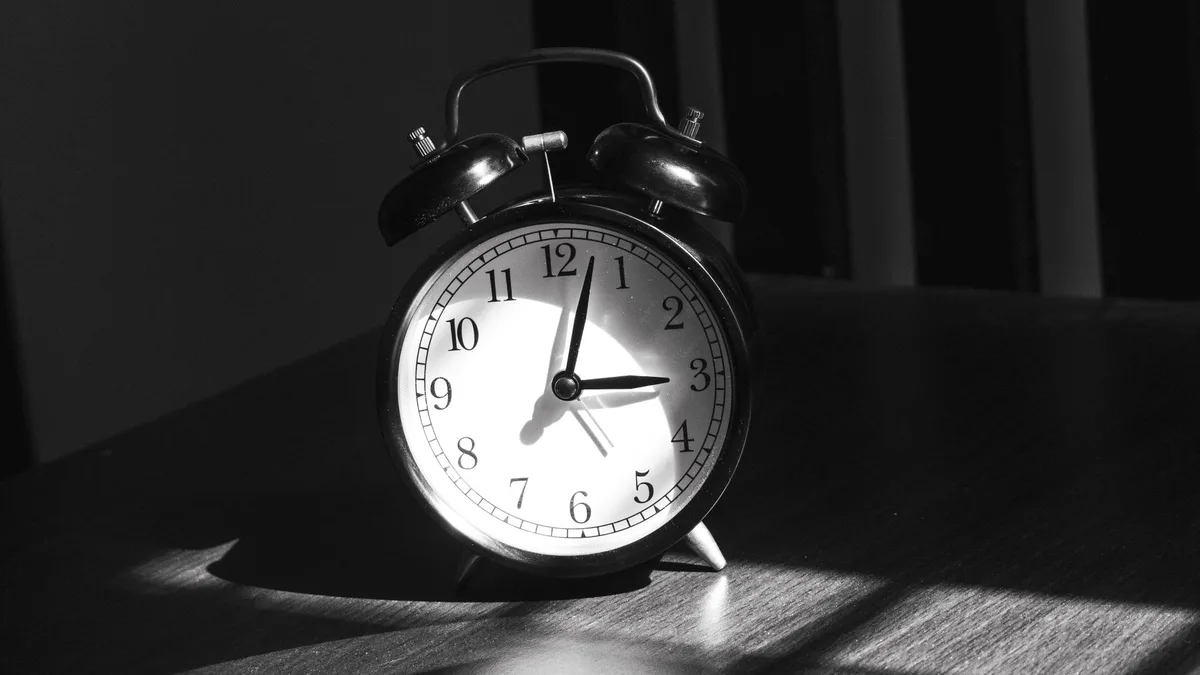
In the early hours of Sunday, 25 October, at 3 a.m., most of Europe will wind its clocks back to 2 a.m. You will get an hour of sleep, lose an hour of evening light, and spend the next week arriving at meetings slightly confused.
You will do this because a European law tells you to. You will also do it eight years after the European Commission announced that it would stop.
The tale of the clocks is small, a little absurd and, for that reason, one of the clearest windows into how the European Union actually works. It has everything: a grand consultation, a rushed proposal, a triumphant Parliament vote, and then nearly a decade of nothing.
How Brussels came to own your alarm clock
Start with an awkward fact. The reason every EU country switches on the same weekend is Directive 2000/84/EC, which fixes summer time across the bloc from the last Sunday in March to the last Sunday in October. Summer time itself is older than that: France brought it in in 1976 after the oil shock, to save energy, and West Germany and other countries followed in 1980 to keep in step, as Euronews recounts.
So when a Spaniard or a Finn grumbles about changing the clocks, they are grumbling about an EU obligation. No member state can simply opt out of it on its own.
The consultation that was supposed to fix it
In 2018 the Commission ran a public consultation. It drew about 4.6 million replies, and 84% wanted the twice-yearly change to end, according to the Commission. Within weeks, Brussels tabled a proposal to scrap seasonal clock changes and let each country choose its permanent time. In 2019 the European Parliament voted for it by 410 to 192, with the aim of ending the change in 2021.
It sounded like Europe listening to its citizens. It was less impressive up close. Of those 4.6 million respondents, about 70% were German, Rapporteur reported. An online survey filled in overwhelmingly by one country is not a referendum. It is a petition with a press release. And the proposal arrived without an impact assessment, a point that defenders of the status quo have used against it, Rapporteur notes.
Then came the hard question nobody had answered: if the clocks stop, which time do you stop on? Permanent summer time gives long evenings and pitch-dark winter mornings in the west and north. Permanent winter time gives early summer dawns and earlier sunsets. Pick differently from your neighbour and you get a patchwork of time zones across the single market, the very thing the 2000 directive was meant to avoid.
National governments looked at that problem and did what governments do. They parked it. The file has been stuck in the Council for close to eight years. Covid, and then Russia's full-scale invasion of Ukraine, pushed it further down the list.
Everyone blames everyone
This week, a cross-party group of 44 MEPs from 15 countries signed a letter to transport ministers, who meet on 29 October, demanding a decision. Their organiser, German Christian Democrat Peter Liese, was in no mood for diplomacy. "Citizens have waited long enough," he said. "We do not need more years of discussions. We finally need a decision." The blockage, he added, "shows once again that problems which people across Europe are concerned about are often not caused by the European institutions, but by those responsible in the member states."
That is a convenient line for an MEP, and it is half true. Capitals have indeed sat on the file. But it was the Commission that promised a quick fix based on an unrepresentative survey, and the Parliament that voted for a 2021 deadline it had no power to deliver. The EU raised expectations in 2018 and has been managing the disappointment ever since. Transport Commissioner Apostolos Tzitzikostas told MEPs a year ago that the system "affects us all, frustrates most, and even harms people". The Commission's answer, prompted by the Polish Council presidency, is a report expected by the end of this year.
A report. On clocks. Eight years after the consultation.
The centre-right solution: give the clocks back
There is a simple way out, and it does not require Brussels to pick a time for 27 countries. Repeal the obligation and hand the decision back to national parliaments, with a modest coordination rule so that neighbours talk to each other before changing. Portugal and Ireland already live an hour behind most of the continent without the single market collapsing. Countries are perfectly capable of choosing whether they prefer light mornings or long evenings. It is, after all, their sunlight.
What is not credible is the current arrangement: a European law that obliges everyone to change, a European proposal to stop changing that nobody can pass, and European institutions taking turns to blame each other while hundreds of millions of people reset the clock on the oven.
So on Sunday morning, enjoy your extra hour. Spend part of it reflecting that a continent which can agree on sanctions packages, a common currency and joint debt has spent eight years unable to decide what time it is.