
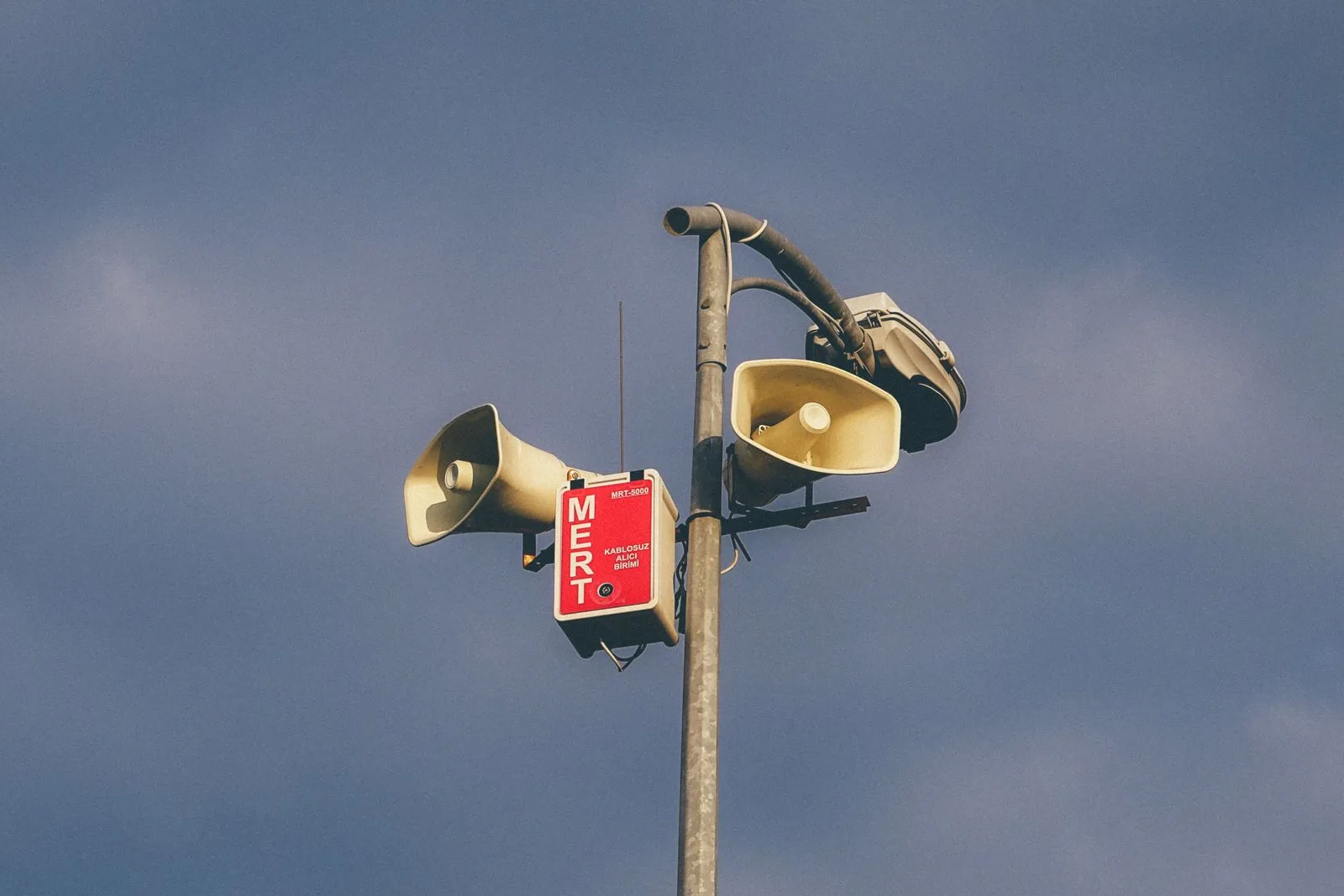
At about half past six on Friday morning, Natalie Szponar was getting her children ready for school in south-eastern Poland when she heard a "whistle and a dull impact", as she told the BBC. A Russian Kh-101 cruise missile had come down in farmland at Nowy Lipowiec, about 50km inside the border. A second suspected missile fell near Rudnik nad Sanem; a jet-powered drone crashed near Mołodycz. Nobody was hurt. That was luck.
On Thursday, Donald Trump had explained these things on Fox News. "Putin has been landing drones in Poland and a couple of little missiles, by mistake," the president said, Politico reported.
A little missile, for the record, is not a category the Kh-101 belongs to. It is built to hit precise targets from long range, and Russia fired 72 of them overnight at Ukraine, along with 26 Kalibr missiles and more than 500 drones, according to Poland's operational commander, Major General Ireneusz Nowak, quoted by the Guardian.
The geography of an accident
Now look at the map. Since 9 November, some 2,800 soldiers from eleven European countries have been drilling near Nowa Dęba, roughly 100km from the Ukrainian border, Tagesschau reports. The exercise, Koalicja 2026, is led by Britain and France. Its purpose is to rehearse the multinational force that would deploy to Ukraine after a ceasefire: Europe's would-be peacekeepers. The three objects came down between 30 and 60 miles from that training ground, on the same day five defence ministers, from Britain, France, Poland, Estonia and Lithuania, toured it.
Donald Tusk did not mince words. "This doesn't look like an accident," he said. He added, pointedly, that "to put it mildly, I don't always agree with the American side's assessment and interpretation of these incidents". His defence minister, Władysław Kosiniak-Kamysz, went further: "This attack was no accident. It was closely coordinated with today's demonstration of the Coalition of the Willing's capabilities."
To be fair to everyone, Tusk himself called the link to the exercise "a hypothesis", and Moscow had made no comment by Friday afternoon. A Kh-101 can stray; one did in July, leaving a crater in the Lublin region. But that is precisely the point. When you fire seventy-odd cruise missiles at western Ukraine within minutes' flight of a NATO border, some of them will cross it. A mistake you can predict, repeat and decline to apologise for is not a mistake. It is a policy with deniability built in. Rzeszów-Jasionka airport, the hub through which much Western aid reaches Ukraine, briefly evacuated its air traffic control overnight, for the first time since the full-scale war began. Little missiles do not do that.
Europe's vocabulary of concern
The reaction from Europe's institutions came in the usual register. Mark Rutte, NATO's secretary general, condemned "grave violations of Polish airspace" and said allied jets had been scrambled; Polish and Swedish aircraft went up and were later stood down. He then called the incident "a consequence of Russia's ongoing war against Ukraine", a sentence in which the missile appears to have launched itself. He did, to be fair, also condemn Russia's attacks. António Costa, president of the European Council, offered his "strong solidarity" with the Polish people and said Russia had to come to the negotiating table, according to the BBC.
Solidarity is welcome. It is also free. The more useful question is what Brussels has promised to do about objects falling out of the sky over its eastern members, and when.
Brussels' own calendar
On this the Commission was admirably specific. Its Defence Readiness Roadmap 2030, presented on 16 October 2025, set milestones. The European Drone Defence Initiative, the project formerly marketed as the "drone wall", and the Eastern Flank Watch were to reach "initial capacity" by the end of 2026. That is in 41 days. The drone initiative is meant to be fully functional by the end of 2027, the Flank Watch by the end of 2028.
And missiles? Those belong to a third flagship, the European Air Shield, meant to "cover the entire Air and Missile Defence spectrum". Its milestones are a launch in the second quarter of 2026 and getting the EU's defence funding work programmes to "prioritise" air and missile defence by the end of 2026. There is no date at all on which it is supposed to stop anything. In September the Council approved an integrated air and missile defence project and the Eastern Flank Watch as joint projects eligible for EU money for "initial deployment". Against a Kh-101 at dawn over a Polish farm, Europe's flagship answer is, for now, a funding priority.
The fair objection
Defenders of the Commission will say, with some justice, that none of this is its job. Shooting down missiles is the business of national air forces and NATO. Poland activated its land-based air defences on Friday and, by its own account, the measures were "preventive in nature". Intercepting a cruise missile that is flying low over farmland in the dark, minutes after it crosses a border, is genuinely hard. Nobody should pretend a Brussels roadmap could have caught it.
Fine. Then Brussels should stop naming things "shields" and "walls". Branding a work programme as a shield is how you train voters to stop believing in the real thing. And credibility is the entire product here. A coalition that wants to guarantee Ukraine's ceasefire has to show first that it can keep its own drill area free of Russian hardware. Moscow, Kosiniak-Kamysz argues, wants "to destroy the unity of Western countries". The quickest way to hand Moscow that win is to let Washington call it a mistake while Brussels calls it solidarity.
What should happen next
Tusk said the incident shows "clearer than ever before why Poland must participate in decisions on Ukraine's future". He is right, and not only about Poland. The country that keeps finding Russian missiles in its fields has earned the right to describe them. American officials have the wreckage; Tusk says "no one will try to pretend anymore that this was just an innocent accident". Europe should say so in one voice, before the next Fox News interview says it for us.
Rutte is in Warsaw on Saturday. Here is a modest agenda. Name the act for what it is. Say what NATO will now do differently over south-eastern Poland. And on 31 December, let the Commission publish a plain inventory of what "initial capacity" actually means on the eastern border: which radars, which interceptors, where. If the answer is a list of consultations, voters deserve to know that too.
One stray missile is an accident. Another four months later, landing near the troops Europe hopes to send to Ukraine, is a message. The least we can do is read it.