
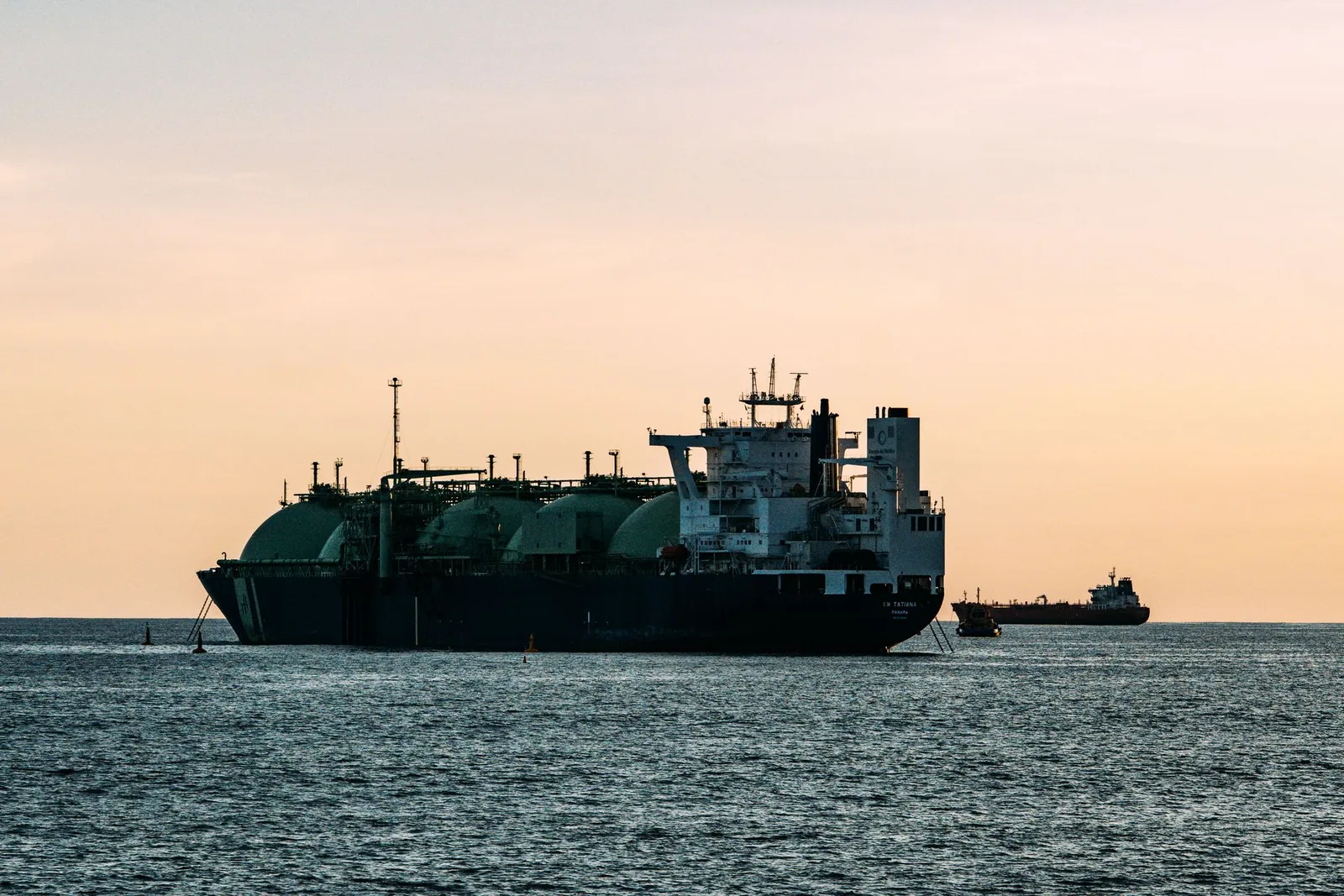
On Thursday morning, Ireland's climate minister Darragh O'Brien, speaking for the EU's rotating Council presidency, welcomed a deal that pushes back Europe's own methane rules by two years. He called it "a pragmatic balance" that would keep the EU leading on methane "while shielding our citizens from high energy prices".
On Sunday, in a plenary hall in Antalya, the same man stood up for all 27 EU countries and told the UN climate summit that its final text was not good enough. "We will not endorse a cover decision or an Antalya pact that does not even mention fossil fuels, which is the key driver of climate change," he said, according to the Guardian's live coverage. The EU, he added, would not accept "a COP that engages in greenwashing". NGOs at the back of the room cheered, the BBC reported.
Three days, one minister, two speeches. Brussels has rarely made its problem at climate summits so easy to see.
A text that cannot say the word
Start with what the EU gets right, because it gets a lot right. The fourth draft put forward by the Turkish presidency and its Australian co-hosts in the early hours of Sunday does not contain the words fossil, oil or coal. The closest it comes is a line "recalling the United Arab Emirates Consensus in its entirety", a polite nod to the 2023 Dubai summit where countries first agreed to "transition away" from fossil fuels. According to the BBC, Monday's first draft mentioned fossil fuels six times. By Thursday's second draft, every mention had gone, after producers led by Saudi Arabia pushed to strip them out.
A climate deal that will not name what causes most of the warming is a weak deal. Germany's environment minister Carsten Schneider said as much, telling Tagesschau that some countries "still make their big money from oil and gas" and are not prepared to cut back (our translation). France's Monique Barbut said Sunday's text was even weaker than the one before. Panama rejected it too. On the narrow question in that room, Europe is on the right side.
The trouble is the other room.
Meanwhile, back in Brussels
The 2024 methane regulation was one of the few EU climate laws with reach beyond Europe's borders. From 1 January 2027, companies importing oil, gas and coal into the EU were supposed to prove that methane emissions at the source were being properly monitored, reported and verified. Methane, the Council itself notes, is responsible for roughly 30% of global warming.
In other words, it was a rule written for exactly the kind of petro-states Europe is now scolding in Antalya. Sell to Europe, play by Europe's rules.
Last Thursday, with COP31 already under way, Council and Parliament negotiators agreed to push that obligation back to 1 January 2029. Reporting on the methane intensity of the fuel slips from 2028 to 2030. The Commission had asked for one year; MEPs had voted for three; they settled on two. The Commission justified it by pointing to "continued strain in global energy markets linked to the conflict in the Middle East". Climate commissioner Wopke Hoekstra insisted at COP31 that Europe was just "buying time" and "not wavering at all", Euractiv's Rapporteur reported.
It is not the first time. The EU's new carbon price on heating and road fuel, ETS2, was due in 2027. It was moved to 2028 in the same law that set the bloc's 2040 target, which itself now lets carbon credits bought abroad cover up to five points of the promised 90% cut, according to the Council. And the 2035 end of new petrol cars is being softened too.
Energy prices for us, principles for them
Here is the part Brussels would rather nobody noticed. When O'Brien defended the methane delay, his argument was energy security and household bills: in a crisis, supply comes first and climate rules can wait.
Swap "Europe" for "Saudi Arabia" or "India" and the sentence still works. That is the logic Europe accepted for itself on Thursday, and the logic it refused to hear from anyone else on Sunday.
And Europe's sermon carries less weight every year. According to the EU's own Joint Research Centre, the bloc produced 15.1% of the world's greenhouse gases in 1990 and 5.9% in 2024. The United States did not even take part in the talks, EUobserver reports. Europe's leverage in rooms like Antalya was never its share of emissions. It was its market and its example. The methane import rule used the first. This month, Brussels spent a little of both.
The fair objection
Defenders will say this is unfair, and part of it is. The methane deal is a delay, not a repeal. It dropped the option, pushed by member states, to keep extending the deadline. EU emissions are about 35% below 1990 levels, while Saudi Arabia's, which led the push to strip fossil fuels out, have more than tripled over the same period, according to the same JRC data. Energy prices after the war in Iran are a real problem, not an excuse invented in Brussels. And refusing to sign a text with no mention of fossil fuels is a defensible line, not a tantrum.
All true. But the Environmental Defense Fund, which backs the law, estimates that 24 billion cubic metres of methane will leak during the two extra years, EUobserver reports. Its Brussels campaigner said governments had "bought themselves two years the regulation never needed". When even your allies call the delay unnecessary, it is hard to lecture anyone else about backsliding.
What a serious Europe would say
By Sunday lunchtime the plenary was still arguing, ministers were drifting home, and the talks risked being suspended until next year. However Antalya ends, the lesson for Brussels is the same.
Europe can be the bloc that tells the world the truth about energy: that supply and prices come first in a crisis, and that climate rules have to survive contact with voters' bills. That is an honest position, and many Europeans share it. Or it can be the bloc that holds everyone, itself included, to the letter of what it signed.
What it cannot credibly be is both: realist at home on Thursday, prophet abroad on Sunday. Greenwashing is when the words say one thing and the policy does another. Brussels should know. It has just had some practice.